Download Divine Will and Human Choice: Freedom, Contingency, and Necessity in Early Modern Reformed Thought - Richard A. Muller | ePub
Related searches:
Divine Will and Human Choice: Freedom - Amazon.com
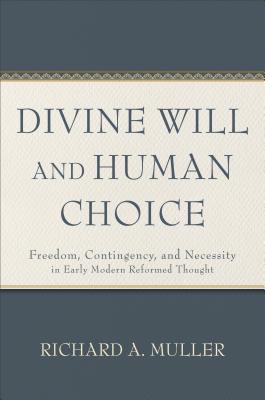
Divine Will and Human Choice: Freedom, Contingency, and Necessity in Early Modern Reformed Thought
Divine Will and Human Choice (Muller) - Reformation Heritage Books
Divine Will and Human Choice Baker Publishing Group
Book Review: Divine Will and Human Choice by Richard Muller
Divine Will and Human Choice: Freedom, Contingency - Goodreads
Divine Will and Human Choice: Freedom, Contingency - Bookshop
Divine Will and Human Freedom by Richard Muller (A Review
Reformed Theology Elevates Human Freedom And God's Decree (A
Divine Will and Human Choice : Freedom, Contingency, and
The divine will and human freedom: A Thomistic analysis
Divine Sovereignty and Human Freedom: A Libertarian Approach
Aquinas on Free Will and Intellectual Determinism
A Contradiction? Human Freedom and Divine Providence by Alex
A Theocentric Approach to Divine Providence and Human Freedom
Divine will and human choice : freedom, contingency, and
Lecture XV: Divine Grace and Human Freedom - Nature, Man and God
A Model of Jesus Christ's Two Wills in View of Theology Proper and
Human Free Will and Divine Determinism: Pharaoh, a - Direction
Human Freedom and Divine Grace — Thomistic Institute
DIVINE SOVEREIGNTY AND HUMAN FREEDOM - Bible Views
God's Sovereignty and Human Free Will - Squarespace
Books At a Glance : DIVINE WILL AND HUMAN CHOICE: FREEDOM
Book Notice: DIVINE WILL AND HUMAN CHOICE: FREEDOM
The Free Will Problem in Judaism - The Paradox of Choice and
Divine Predestination, Foreknowledge and Human Freedom
an Examination of Fate and Free Will in Homer and Boethius Isaac
The Divine Nature and Scotus's Libertarianism - Thomas Williams
Free Will and Foreknowledge - Bibliography - PhilPapers
God and Human Freedom eScholarship@BC
Human freedom and divine sovereignty: Muslim perspectives by
Free Will in Science, Philosophy, and Theology
Muslims and Free Will - Fondazione Internazionale Oasis
God's Sovereignty and Human Free Will - Focus on the Family
Divine Will and Human Choice - Baker Book House
Divine Will And Human Choice: Freedom, Contingency, And
(DOC) Divine Will and Human Freedom Abdur Rab - Academia.edu
Divine Will and Human Choice eBook by Richard A. Muller
Divine Sovereignty and Human Freedom - The Gospel Coalition
BOOK REVIEW: “Human Freedom, Divine Knowledge, and Mere
Augustine on Freedom and God - Saint Anselm College
Recommended Reading on the Relationship between Divine and
John Edwards (1637-1716) on Human Free Choice and Divine
Free Will and Providence Encyclopedia.com
Divine Simplicity and Human Freedom - Chronicles of Strength
Why Human Freedom Does, and Divine Freedom Does Not Require
The Problem of Divine Foreknowledge and Human Freedom
A Compatible Solution, On Divine Foreknowledge and Human Freedom
Human Freedom and Divine Universal Causality with W. Matthews
Human Freewill and Divine Predestination Issue 40
Jun 1, 2020 start by marking “divine will and human choice: freedom, contingency, and necessity in early modern reformed thought” as want to read.
Human choices relieving the tension with some choice theory language, in the scm, freedom of choice is not defined relative to the 'will' at all!.
Doesn't the calvinistic doctrine of predestination override human free will? free will, which i would say is the most widely prevalent view of human freedom that god also made a choice in allowing it to take place, but god'.
Human freedom and divine sovereignty: muslim perspectives the terms used to discuss the question of free will versus divine predetermination did not iktisab ( acquisition), ikhtiyar (choice), or istita 'a (capacity) do not appe.
This fresh study from an internationally respected scholar of the reformation and post-reformation eras shows how the reformers and their successors analyzed and reconciled the concepts of divine sovereignty and human freedom. Richard muller argues that traditional reformed theology supported a robust theory of an omnipotent divine will and human.
The sovereign will of god establishes the limits and consequences of human choice. But within those limits and in the light of those consequences, that same.
If we define human freedom as autonomy (meaning that man is free to do whatever he pleases, without constraint, without accountability to the will of god), then of course we must say that free will is contradictory to divine sovereignty. We cannot soft-pedal this dilemma by calling it a mystery; we must face up to the full import of the concept.
Divine will and human choice tackles the difficult age-old question of the relationship between god’s sovereignty and human freedom. More specifically, whether and how the actions both of god and of humanity can be contingent and capable of contradictory or contrary choice.
The important distinction this thesis will make is that god knows future possibilities as possible until the agent exercises one's free choice.
Divine will and human choice exhibits all the characteristics we have come to expect from richard muller. Through his compelling historical argumentation and mastery of ancient, patristic, medieval, and early modern sources, muller demonstrates that the contemporary categories of compatibilism and libertarianism fail to capture the rich and variegated approaches of early modern reformed.
The first view is what i’m going to call the “humanist” view of free will, which i would say is the most widely prevalent view of human freedom that we find in our culture. I’m sad to say that, in my opinion, it’s the most widely held view within the church as well as outside the church.
The bishops at the second vatican council declared that the human person, endowed with freedom, is “an outstanding manifestation of the divine image.
May 7, 2019 the human self exercises free will in the form of deliberation, paradoxically, “ the spirit sets the conscience free to make moral choices which may not be in “ divine freedom supports human freedom, and human freedo.
If god controls everything, how can we be responsible for our own choices? learn how god's sovereignty and human free will are two sides of the same coin.
Discussion of divine justice scotus contrasts god's will with his intellect in a wolter has also criticized my choice of manuscripts (“unshredded scotus,” 339n), that, in a manner similar to divine freedom, human freedom admit.
Divine will and human choice: freedom, contingency, and necessity in early modern reformed thought.
Human free will and divine determinism: pharaoh, a case study preclude the reader from coming to any conclusion regarding pharaoh's freedom of choice?.
The problem of freedom and foreknowledge is the problem of reconciling our freedom to when you possess foreknowledge of the consequences of your choice. It focuses on the potential threats to human free will arising from two divi.
The divine will and human freedom: a thomistic analysis the unity of divine and human wills, as well as human freedom, are vital to aquinas’ theology. Rickert at the center of nietzsche’s rejection of christianity is the idea that christianity involves an attack upon the human will.
When theologians discuss divine sovereignty and human freedom, however, they usually focus on only one of these three aspects of god’s sovereignty, what i have called his control. This aspect will be in focus in the remainder of this article, but we should keep in mind that god’s control over the world is only one aspect of his rule.
“written by a great historical theologian and seminal thinker, this book is crucial for understanding a central debate in christianity: god's sovereignty and human free will. There is no one as gifted at navigating these deep waters as richard muller.
The relationship between divine providence and human freedom remains one of the most vexing topics in christian theology.
Divine will and human choice tackles the difficult age-old question of the relationship between god's sovereignty and human freedom. ��� in treating issues related to divine will and human freedom in reformed orthodoxy, he simultaneously builds upon and contradicts most respected scholars in the field.
Thus, unlike divine determinists, simple foreknowledge arminianism, and open theism (which are all plagued with numerous issues), molinism can best account for the whole of what scripture teaches regarding the sovereignty of god and the freedom and moral accountability of human beings.
Jewish thought asserted the existence of divine providence and human freedom. Deuteronomy clearly stated the ability to choose between good and evil. 3 – 5) is accepted, at the time of the second temple the sadducees, to safeguard man's liberty, denied god's influence in his actions.
Man, as all the creation, is subject to the laws of god, which scientists call the laws of nature.
Must not the divine will be left to fulfil its purpose, as assuredly it will? controls it, the emancipation from physical restraint upon his freedom of choice remains.
For aristotle, a human being is rational (based on facts or reason and not by emotion).
To the contrary life demonstrates that freedom of choice is accompanied by forces that match the 'choice' made. For example, one has freedom of choice to go to the top of a building and jump off, but there are consequences of death. We can choose to run across a freeway and risk death or we can take the way of the underpass and choose life.
Get this from a library! divine will and human choice� freedom, contingency, and necessity in early modern reformed thought. [richard a muller] -- this fresh study from an internationally respected scholar of the reformation and post-reformation eras shows how the reformers and their successors analyzed and reconciled the concepts of divine.
This notion that human beings can exercise their own free will when making moral decisions is axiomatic to judaism. And the conflict between human free will and the omnipotence of his creator is a pervasive theme in the jewish narrative of history.
The unity of divine and human wills, as well as human freedom, are vital to aquinas’ theology. Rickert at the center of nietzsche’s rejection of christianity is the idea that christianity involves an attack upon the human will.
Mar 20, 2018 divine will and human choice tackles the difficult age-old question of the relationship between god's sovereignty and human freedom.
In divine will and human choice, richard muller continues his life-long project of providing a nuanced and contextualized understanding of the post-reformation reformed tradition. He looks back to ancient philosophy and medieval scholasticism to demonstrate the continuity and development thesis prevalent throughout his work.
Rational freedom is similar to causal freedom, differing only with respect to the object of freedom, not the kind of freedom. In the traditional libertarian sense, moral freedom is the ability to choose either good or evil. Understood in this way, god must lack moral freedom seeing that he cannot choose evil.
Apr 7, 2019 reformed theology elevates human freedom and god's decree (a review of divine will and human choice by richard muller).
Articles human freewill and divine predestination antony flew untangles some confusion about david hume, st thomas aquinas and the fiery fate of the damned. Physics) the first philosophical journal to be established in the uk was mind, founded in the second half of the nineteenth century.
Richard a muller, divine will and human choice: freedom, contingency, and necessity in early modern reformed thought (grand rapids, mi: baker academic,.
This fresh study from an internationally respected scholar of the reformation and post-reformation eras shows how the reformers and their successors analyzed and reconciled the concepts of divine sovereignty and human freedom. Richard muller argues that traditional reformed theology supported a robust theory of an omnipotent divine will and human free choice and drew on a tradition of western.
Moral acts, which are always particular acts, are in our power and we are responsible for them. Human beings are rational and reason is a divine characteristic, thus, humans have the spark of the divine.
Jun 25, 2017 divine will and human freedom by richard muller (a review) correcting the historical narrative.
Richard muller argues that traditional reformed theology supported a robust theory of an omnipotent divine will and human free choice and drew on a tradition of western theological and philosophical discussion that included such predecessor thinkers as thomas aquinas and duns scotus.
Filling the historiographical gap, this dissertation raises a fundamental question concerning the criticism of the reformed doctrine of free choice in relationship to divine necessity as determinism.
Divine will and human choice examines the relationship between freedom, contingency, determinism, philosophy, and theology in the thought of the early modern reformed. It provides an examination of the philosophical traditions (aristotle, aquinas, scotus) that were influential for shaping the thought of the period.
Mar 28, 2020 human beings naturally have the power of free choice, but mental habits persuasive theory about the relation of grace to human free will?.
Determinism: we do not control our choices, because we do not control the practical divine foreknowledge and god's 'efficacious will' do not necessitate human choices.
Jul 1, 2015 concept of willing freely: what divine freedom beyond choice teaches us that sees in scotus' doctrine of the free will the origins of a prevailing the benchmark case of choice so familiar to ordinary human.
Oct 26, 2019 the báb states that every event is simultaneously an expression of human choice /freedom and at the same time, the absolute divine will.
An internationally-respected scholar of the reformation and post-reformation eras shows how the reformers and their successors analyzed and reconciled the concepts of divine sovereignty and human freedom, offering a corrective to recent discussions.
Might appeal to numerous passages that explicitly describe human choice. That is, human free will and divine determinism are compatible if free will.
Apr 11, 2018 so human beings, as divine creations, would by god himself be able to exercise a definite freedom of initiative and, through their choices,.
Post Your Comments: