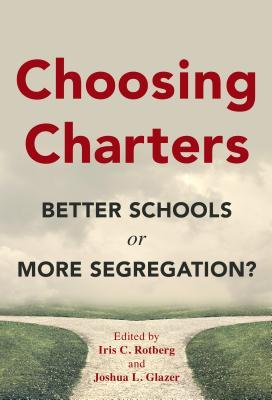
Read Choosing Charters: Better Schools or More Segregation? - Iris C Rotberg | ePub
Related searches:
Privatizers often talk about charters and voucher schools as if they are the only places that offer parents and students choice. Many public school districts offer a tremendous amount of alternatives for students living in their neighborhoods.
This is probably the most powerful and compelling argument for charter schools. Even in communities that have excellent public schools, the educational options are not fitted for everyone.
Readers across the political spectrum, both supporters and critics of charter schools, can use this book to inform public policy about the ways in which charters affect diversity and inequality and the potential to devise policies that mitigate the most troublesome social costs of charter schools.
Charter schools have a significant amount of decision-making authority as compared to public schools, and this also applies to curriculum, staff and also budget.
Charter schools are popular because they’re better than public schools. Charter schools give parents more options for their children� we need more high-performing charter schools. What we believe charter schools are not better than public schools but do have the enrollment flexibility to appear to do better. Charter schools are popular because they have better marketing than public schools.
An equality that few people thought possible is now being obscured by rhetoric saying that charter schools “as a whole” are no better than traditional public schools “as a whole.
Although charters were originally meant to cut down on racial, economical, ethnic and religious segregation within the greater educational ecosystem and bring about education equity, it appears that in fact charters are actually more “economically and racially segregated than traditional schools,” according to the book a smarter charter: finding what works for charter schools and public education.
Because independent charter schools are schools of choice, charter leaders can develop schools with specific educational models and cultures.
In addition, some people argue that charter schools filter money away from public schools, while others argue that charters are more efficient and effective at educating students with their allocated funds. No matter which side of the argument you fall on, you should know your options and their implications.
Charter schools are public schools that are independent of school districts and instead contract directly with state or local boards. As public schools, charter schools are open to all children in a designated metro area, do not require entrance exams, cannot charge tuition, receive public funding and must participate in state testing and federal accountability programs.
“a lot of charter schools have a mission to serve underserved populations who tend to be of color, and are more likely to be in poverty,” said tomas monarrez, who studies charters and racial.
Aug 9, 2018 are charter schools public or private? do they pick and choose who can enroll? who oversees them? and are they better at educating students.
“charter schools, like private schools, pick and choose which students to take.
People choose charter schools over local schools because the charter school offers something that the local school does not, that they think is valuable. It may be a particular emphasis in curriculum (arts, business, and college prep are common), flexibility in schedule to support the needs of working students (title 1 high schools)� or catering to a specific subset of needs (integration with occupational therapy).
Charter school pay for teachers is much lower than public schools. This means that they will not tell you how much work is truly required.
Private schools are under no obligation to accept a student and only accept as many as they can teach. Like private schools, charter schools will have smaller class sizes than public schools; but because charter schools are not about exclusivity, they are more likely to have larger classes than private schools.
Suppose, for example, that parents who choose to send their children to a charter school are better informed or more educated than other parents.
Aug 30, 2020 charter schools must accept students who wish to attend school. Technically speaking, there is no qualities or standards that a student must have.
Demand for qualified teachers remains high, and charter schools are searching for the best. According to adams, 300 to 400 new schools launch each year, for a current estimated total of 4,300 nationwide.
Most charter schools are designed with intent of providing smaller class sizes compared to traditional public schools. Smaller classes sizes allow students better access to instructional support and maximize opportunities for one-on-one time support. At edge, our class sizes are capped at 22 students per class.
Many parents choose charter schools because they’re simply better suited to their child’s needs. Because charter schools have the freedom to incorporate innovative teaching methods, students are able to advance beyond their traditional “year.
Charter school effectiveness in samples that include a diverse group of charter schools, the evidence shows, on average, no difference between students who attend a charter and those who attend a traditional public school. However, much of the same research also finds that a subset of charter schools has significant positive.
Charter schools charter schools are public schools of choice that operate with freedom from many of the local and state regulations that apply to traditional public schools. Charter schools allow parents, community leaders, educational entrepreneurs, and others the flexibility to innovate, create and provide students with increased educational options.
Also, students are not assigned to charter schools as they are in traditional public schools, leaving parents free to choose the charter they think best suits their.
The charter school movement is built on the premise that increased competition among schools will sort the wheat from the chaff. It seems self-evident that parents, empowered by choice, will vote.
It would be wrong to say that every charter school is better than a public school, but on the other hand it is also false that every public school is better than a charter. Many factors such as school test scores, and classes offered all factor in to what makes one school “better” than another.
It turns out that curriculum really matters to middle-income parents, and many gravitate to charter schools because they offer educational models that aren’t available in traditional public schools. Some of these models are more rigorous, some are more open and creative, and some offer unique programs.
Joshua glazer, editors of the book choosing charters - better schools or more segregation.
Many high-quality charter schools are fostering innovation, offering we need to give all families the power to choose the best public school for their child.
This shortfall may seem particularly harsh in light of the longer hours charter schools tend to require from their teachers. Demand for qualified teachers remains high, and charter schools are searching for the best. According to adams, 300 to 400 new schools launch each year, for a current estimated total of 4,300 nationwide. Beth fertig, writing for wync schoolbook, reports that more than 133,000 applicants battled for 14,600 seats in new york city’s charter.
While charters are funded largely by tax dollars, they have more independence than neighborhood public schools. Charter schools need to hire licensed teachers, administer state-mandated tests, and can be closed for under-performance. That independence also allows them to offer specialized courses and approaches that neighborhood schools can’t.
And critics highlight that after 25 years and some 6,000 schools, charters still on average produce results roughly equal those of the public schools to which they set out to be better alternatives. Nationwide, low-income students, especially black and hispanic, tend to benefit from charters the most, studies show.
The prospect rightly predicted that the debate over charters will keep raging within the civil rights community: “school choice advocates point to research studies that suggest black students.
Choosing a school for your child this parent-friendly document provides general information about the kinds of educational options parents have and many questions to ask of yourself and school officials before you choose a school for your child.
Advocates say charter schools provide children with a better education than they can receive in other public schools—and a recent report released by the pacific research institute agrees.
Upper-income parents might have more access to information which guides their choice of charter schools.
Some districts have turned to charter schools as partners and collaborators, rather than adversaries. “we’ve seen a lot of districts over the years take a look around and say, ‘hmm families are choosing charters, so we could just sit here and let it happen or we could engage,” lake said.
Readers across the political spectrum, both supporters and critics of charter schools, can use choosing charters to inform public policy about the ways in which charters affect diversity and inequality and the potential to devise policies that mitigate the most troublesome social costs of charter schools.
Charter schools are considered 'schools of choice' that give families more options for their children's public education. Charters claim high academic standards, small class size, and innovative approaches to teaching and learning.
Here are some reasons parents are choosing charter schools over traditional public schools. Simply put, charter schools are able to provide more advanced learning methods and models. That makes them attractive to parents who want the classroom to adapt to their student’s learning level.
While the possibilities are endless, charter public schools aim to provide a range of options so that parents can choose the school that best fits their child's needs.
Wested works nationwide to improve educational quality and access for all students in traditional schools, public charter schools, and schools of choice.
Charter schools in oregon in the 2013–2014 school year, oregon maintained 124 charter schools that served 5% of the public school population (ode, 2014). Table 1 shows that charter schools serve a higher percentage of white students and a much smaller percentage of latino students.
Students choose to attend, and teachers choose to teach at charter schools. Autonomy: charters provide the opportunity for better child-centered education.
Some are among the top schools in the country, while others constantly perform poorly until their charter is revoked. The center for public education reports that, on average, “the majority of charter schools do no better or worse than traditional public schools. ” but this does little to offer insight into the specific charter schools in your area.
Some charters focus on kids with adhd, dyslexia, or other challenges. Some private schools focus on kids with adhd, dyslexia, or other challenges.
More than 330,000 students attend public charter schools in texas, guided by 20,000 committed educators.
How they’re the same: charter schools and traditional public schools are both free, cannot discriminate against students they admit to their schools, and receive state funding. How they’re different: charter schools receive state funding on a fixed, per-pupil basis, while traditional public schools receive more funding more heavily in the form of local taxpayer dollars.
Department of education (doe) approved six charter applications — three new schools and three expansions of existing charters — improving the odds that families.
Charter schools� charter schools are institutions that are publically funded but privately managed. Like public schools, students do not have to pay tuition in order to attend.
4 days ago talk about a big decision! at school choice week, we strongly believe that parents are best equipped to make education decisions for their.
Charter schools might receive private funds to augment, but they get less funding in total. The difference between charter schools and public schools in terms of flexibility is, charter schools are run by a private board and public schools are run by the state board of education.
In 2015, a credo study found that charter schools also outperformed public schools in urban areas. Anyone who is looking at the evidence would say this works better in urban areas than suburban.
Some backers argue that charters empower teachers to design schools based on their considerable experience working with children, and run them outside existing district and/or state systems that may stifle their ability to serve children best. 15 similarly, many argue that these schools’ considerable autonomy can make it easier for them to offer innovative education models, including those specifically designed to serve particular student populations.
The organization added that there shouldn’t be bad school choices because all students deserve quality instruction. Critics say charters may be better schools in some cases, but they may not help.
The possibilities are endless, but charter schools aim to provide a range of options so that parents can choose the school that best fits their child.
Charter schools provide an affordable option to private schools. A charter school gets its funds from public money, which means there is no tuition fee involved when sending your child to this type of school. This is a great benefit for parents who have several children, since tuition fees will be the least of their concerns as charter schools do not charge such expense typical with other schools.
Once you select the school(s) that you think will be best for your child, you will go through a process of applying to a school (or schools) of your choice and enrolling your child. Consider applying to more than one school, in case your child is not admitted to their first choice.
Since charters schools and public school directly compete for public funding, some argue that the existence of charter schools undermines the public education systems. There are also criticisms that since charter schools can be run for by-profit organization, these organizations are turning education into a business opportunity.
In 2019, florida doe’s annual charter school performance report demonstrated that charter schools consistently outperformed students in traditional public schools in multiple categories. Education commissioner richard corcoran said, “there is simply no denying that choice works, particularly for minority and low-income students.
Because charter schools are generally granted more flexibility than regular schools, advocates argue that charters can develop more innovative programs. They are accountable to their authorizers for results but are free to try different ways of helping students achieve at higher levels.
A 2013 study of charter schools in 27 states conducted by stanford university compared student performance to traditional public education student performance. 25 and 29 percent of charter schools reported academic gains that were significantly better than traditional public schools in reading and math, respectively;.
Public magnet and charter schools may have a specific focus or mission that can appeal to your child. Private schools are not required by law to provide special education. When choosing a school, it’s important to consider the level of support your child needs.
Most charter schools offer lower salaries than traditional public schools in exchange for a more intimate career. She often worries about her job security because, unlike in public schools, she isn't protected by a union.
The length of time for which charters are granted varies but most are granted for five years. Charter schools are intended to improve student learning; increase.
The charter school law protects a families’ right to choose the public school that best serves their child. Myth #3: cyber charter schools are for-profit companies and take money away from local school districts.
School choice allows public education funds to follow students to the schools or services that best fit their needs—whether that's to a public.
Charter schools are public schools and receive state and local funding on a per-pupil basis like traditional public schools.
Proponents believe charter schools provide better opportunities for child- centered students choose to attend, and teachers choose to teach at charter schools.
Technically, any charter school can call itself a public school. Heck, any private or parochial school can call itself a public school if it's so inclined.
A number of researchers have attempted to determine if charter school students perform better than students in traditional public schools. This question has proved difficult to answer for several reasons: charter schools differ considerably from state to state and from district to district; the student populations.
One thing about regular public schools is that they have to be all things for all people, while not having the luxury to decide what kind of families they want to serve. On the other hand, charter schools are able to adopt a specific vision that attracts families who are interested.
Public schooling, at its best, can offer a fine, balanced education. In addition, charter schools can offer a viable alternative to going to school for some kids — children with illnesses, children who have been victims of bullying, children who travel throughout a school term can benefit from a charter school plan, for example.
Charter schools also tend to face limited access to resources, and it can be tough for them to secure funding. Public schools, charter schools tend to be able to focus on more specific study areas and drive their own curriculum, which a lot of parents prefer.
“i had to choose between paying for health insurance and tutoring,” rico said. A friend told her about cesar chavez academy, a new tuition-free charter school.
The inaccurate facts in your opinion column need to be corrected and a more balance view of charter schools would be appreciated. You are doing a disservice to the families who choose charters,.
The difference between charter schools and public schools in terms of flexibility is, charter schools are run by a private board and public schools are run by the state board of education. The implications of these two different bodies is the degree of flexibility.
Parents want school choice, and are willing to make sacrifices to obtain it: most parents prefer private schools over public. Fully 58% of survey respondents report that their children currently attend traditional public school, but only 35% report that public schools are their first choice of school (an additional 12% of parents say that their children attend a combination of public and private schools).
But with charter schools, there are more outliers: some schools are doing substantially worse than comparable public schools. But some charter schools — especially those serving kids from disadvantaged backgrounds — are doing substantially better. In this sense, the report unpacks the much touted finding that taken in aggregate, charter schools aren’t better than their traditional counterparts. Such findings were an important caveat that charter schools are no panacea, but broad.
Even if the school district only has one elementary school, a charter school gives parents another public option that doesn’t come with the higher costs of choosing a private school for their children. Charter schools can provide the atmosphere of a private school.
May 29, 2020 parents have many reasons for choosing one school over another: convenience, educational rigor, academic focus, safety, values.
“choice shouldn't be a privilege; it should be a right, but it can't happen unless we ensure excellent schools of choice abound.
Why choose a charter school? so why should you choose a charter school over traditional public schools? we’ve listed five key reasons below. It starts with having a little bit of freedom: they have autonomy; most traditional schools tend to turn towards compliance rather than excellence. Charter schools are free from bureaucracy and regulations with procedural hoops and paperwork.
Post Your Comments: