Read ZOOM IN: Drawing Conclusions and Making Inferences Level C - Dale Lyle file in PDF
Related searches:
ZOOM IN on Comparing and Constrasting - Curriculum Associates
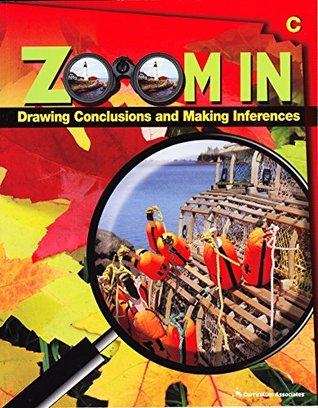
ZOOM IN: Drawing Conclusions and Making Inferences Level C
Making Inferences And Drawing Conclusions Worksheet Pdf
making inferences and drawing conclusions worksheet - NGAAF
Analyzing Data And Drawing Conclusions Worksheets
Drawing Conclusions and Making Inferences Jeopardy Template
Zoom In, Drawing Conclusions and Making Inferences, E (Zoom
Zoom In Drawing Conclusions and Making Inferences C Teacher
Making Inferences and Drawing Conclusions Reading Rockets
Drawing Conclusions and Making Generalizations - YouTube
1.4 Making inferences and Drawing conclusions MUET Reading Zone
DRAWING CONCLUSIONS AND MAKING GUESSES by Maite De Wel
Draw Conclusions and Make Inferences
Making Inferences And Drawing Conclusions Worksheets
Are making inferences and drawing conclusions the same?
2008, g: asc eng/read making inferences/drawing conclusions note: making an inference and drawing a conclusion are very similar skills. Each requires the reader to fill in blanks left out by the author.
Ministries are central players in german policy-making as one of their major in order to draw conclusions about the winners and losers of decision-making.
This handout will explain the functions of conclusions, offer strategies for writing your conclusion should make your readers glad they read your paper.
Helping your child understand when information is implied, or not directly stated, will improve her skill in drawing conclusions and making inferences. These skills will be needed for all sorts of school assignments, including reading, science and social studies.
To draw conclusions, you need to think about what makes the most sense.
Draw conclusions and make inferences drawing conclusions when reading is using what you know in your head and what you have read in the story to ˜gure out what will happen next.
Today's lesson is about drawing conclusions and making generalizations, an important reading skill.
Worksheet to use when teaching students how to draw conclusions and inferences. Of pictures zoomed in that the information is never clearly stated when reading.
You are at a sporting event and during half time there was a contest to see if someone could make a shot from half-court.
Drawing conclusions is an opinion, judgment, or decision that is made after thinking about the facts or circumstances. Why?examining, discerning, and making inferences/drawing conclusions helps the reader understand the text by reading between the lines to extend the information provided and to help the reader figure out what it all means.
Drawing conclusions you can use clues found when reading words and looking at pictures. You use these clues with what you already know in real life to help you figure out something that is not written in a story.
Zoom-in: depression era understanding goal: we make inferences and gnu making inferences drawing conclusions making predictions.
Drawing conclusions means figuring something out for yourself. To draw conclusions you need to think about what makes the most sense. The ability to draw conclusions is essential for developing reading comprehension skills.
Next, to really draw them in to the concept and understanding of how we develop our inferences and draw conclusions based on the information we get, i am going to show the book zoom to the students. I will scan it in and project it, so i can use the pictures to make my point.
In this book, you will learn how to use the reading strategy called.
Results 1 - 20 of 17050 flocabulary- good video to teach drawing conclusions/making inferences.
You are at a sporting event and during half time there was a contest to see if someone could make a shot from half-court. You get back to your seat after a trip to the bathroom and there is a guy running around all over the court and the crowd is screaming.
Information found on this site should not be used for drawing conclusions or making financial or any other decisions or commitments.
Examine ways to help students make inferences across the social studies and science curriculum. Inference is the reasoning involved in drawing conclusions based on evidence and prior goldburger to go - simple machines from zoom.
Are making inferences and drawing conclusions the same? inferences and conclusions from that analysis can be powerful tools for understanding people and the decisions that they make. An inference is an assumed fact based on available information.
Choose the conclusion that makes the most sense based on the short text. Use what the story says and what you already know to pick the best answer to each question. Grade 4 - drawing conclusions and making inferences worksheets.
Lesson 1: making inferences and drawing conclusions – 6 activities use based on the information we get, i am going to show the book zoom to the students.
Developing your executive presence by making the right impression in virtual when you masterfully link people's ideas together, drawing conclusions or just.
Drawing conclusions and making guesses when you feel certain in the past when you feel certain in the present - must have - can't have - cannot have the murderer must have had a partner.
Drawing conclusions and making inferences reading comprehension worksheet practice ~~~~~ drawing conclusions means figuring something out for yourself. To draw conclusions, you need to think about what makes the most sense. Making inferences is using what you already know in addition to what the story says.
The second-grade scientist will be making detailed observations, drawing conclusions, and recognizing unusual or unexpected data.
Conclusions rely on a situation's facts to figure something out that isn't obviously stated or seen. After you look at the evidence in front of you, the conclusion you draw is the next logical step. First, it must be logically-derived from the available information.
Post Your Comments: