Read Facial Proportions of Babies: drawspace module 6.1.R5 - Brenda Hoddinott file in ePub
Related searches:
6.1.R1 Basic Facial Proportions: Infant to Adult - Drawspace
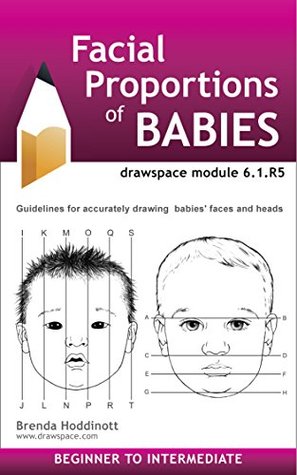
Facial Proportions of Babies: drawspace module 6.1.R5
6.1.A2 Sketch and Shade a Baby's Mouth - Drawspace
Drawspace (@drawspace) Twitter
HODDINOTT FINE ART PUBLISHERS - Drawspace
6.1.A1 Use Guidelines to Draw a Baby Face Drawspace Courses
6.1.A2 Sketch and Shade a Baby’s Mouth - Drawspace
Everyone Can Draw Drawspace
The most common mistake, when drawing babies, is making the face too big in relation to the skull. An adult's face is half the size of the skull, but a baby's face is only one third.
Many people make mistakes when drawing faces because they don't fully understand facial proportions. Proportion refers to the relationship in size and placement between one object and another. There are many formulas that one can adapt to draw the facial features in the correct location.
Here are five proportions of the face that can be easily memorized and used as reference points during the block-in of your next portrait drawing. F r e e d o w n l o a d download the essential proportions of the face infographic at the end of this article to use as a reminder of these basic proportions�.
The shape features were based on the characteristic of a frontal face, which are: (1) size of a face, (2) facial golden ratio, and (3) shape of a face is oval.
How to figure out the body and head proportions in dollmaking, for waldorf inspired dolls or natural fiber art dolls. Discover how to make your doll look like a baby, a toddler, an older child or a teenager by changing the head and body ratios.
Doug jones, a visiting scholar in anthropology at cornell university, said that the proportions of facial features change with age due to changes in hard tissue and soft tissue, and jones said that these age-related changes cause juvenile animals to have the characteristic 'cute' appearance of proportionately smaller snouts, higher foreheads and larger eyes than their adult counterparts.
How to draw baby and toddlers heads in the correct proportions - drawing weekly� doodles and tuts: drawspace lesson h15: how to draw a baby's face.
Guidelines used for drawing babies and young children are quite different than those for older children and adults.
Even if each of the features is accurate on its own, if the proportions are off, the whole thing looks a little strange. I’m going to give you some general rules about facial proportions to get you started, but remember that everybody is different and these rules will not apply to every face.
Pediatricians can learn a lot about how well your baby is growing by taking their head circumference, length, and weight measurements. Your doctor will take these at every checkup, starting at birth.
26 oct 2017 online drawing lessons -- drawspace but, it is instructive because you will learn all about facial proportion, expression and sketching basics.
2 jul 2014 children's proportions are different than those of adults: young children have rounder faces with larger eyes that are spaced farther apart.
In drawing a very young baby, draw the ball and plane with the facial plan much shorter.
How to draw baby and toddlers heads in the correct proportions. Drawing babies today we will show you how to draw a realistic baby face with the correct proportions. Drawing an adult face is hard enough, baby faces are so much more difficult. This article is also a reference sheet to the correct proportions of a baby and toddler head/face.
Examining various facial guidelines used by professional artists to create realistically-proportioned drawings of people. 6 pages when printed (digital formats will vary), 12 illustrations.
Today we will show you how to draw a realistic baby face with the correct proportions. Drawing an adult face is hard enough, baby faces are so much more.
The proportions of a baby’s head are much different than those of an older child or an adult. Many beginners tend to draw a baby’s face too big in proportion to his or her head, resulting in a “mini” adult rather than an accurately drawn baby.
Baby (1 month to 1 year) by three months the proportions may not have changed much but the body is noticeably chubbier, and as the legs unfold they increase the feel of dramatic growth. If held up (it may be too early to stand alone), a 10-month-old would look close enough to a toddler, but with definite baby features such as the lack of neck.
The proportions and placement of facial features are actually exactly the same for a man as they are for a woman. Now of course these kind of things are unique to every person but there are a few drawing tricks that you can implement to differentiate between male or female.
Face drawing proportions: the jaw line the jaw starts just a little bit behind the middle point on the side of the head where the horizontal and side-to-side guidelines meet. This line first drops down at a steep angle and then changes direction to curve towards the lowest point of the chin.
The legendary children's author had some thoughts about america first.
In normally-fed children, all baby fat is gone, but the muscles are still infantile, so the body looks skinny. 5 heads in early childhood, to 6 heads between 7 and 9, bearing in mind that the speed of growth is unequal – some children look younger than their age and some grow so fast they look like teenagers.
We create art to draw children well, you need a strong understanding of facial proportions.
Some variations of rules for remembering human facial proportions are simple and others are quite complex. However, the same basic guidelines for proportions, apply to each of them.
Drawing a child as a child nears seven or eight years of age, the face drawings: children's facial proportions baby face drawing, body proportions from infant to adult - overview - drawspace drawing skills, drawing lessons.
Evolutionary, as well as cultural, pressures may contribute to our perceptions of facial attractiveness. Biologists predict that facial symmetry should be attractive, because it may signal mate quality. We tested the prediction that facial symmetry is attractive by manipulating the symmetry of individual faces and observing the effect on attractiveness, and by examining whether natural.
Whether you want to learn a new skill, spark your creativity, or boost your memory, drawspace lessons are designed to benefit people of all ages and skill levels.
Your baby can now wiggle his limbs — you may begin to feel those first flutters of fetal movement sometime around week 18 (give or take a few weeks). If you get a peek at your baby during your week 20 ultrasound, you’ll now be able to see those bones he’s busy building — they’re finally visible.
Introduction; outline mouth proportions; form a baby's lips with shading use crosshatching graduations to shade the facial forms around the mouth (figure.
Post Your Comments: