Download Copyright and Patents for Inventions, Vol. 2: Pleas and Plans for Cheaper Books ANS Greater Industrial Freedom, with Due Regard to International Relations, the Claims of Talent, the Demands of Trade, and the Wants of the People (Classic Reprint) - R a Macfie | ePub
Related searches:
The Difference Between Copyrights, Trademarks and Patents - The
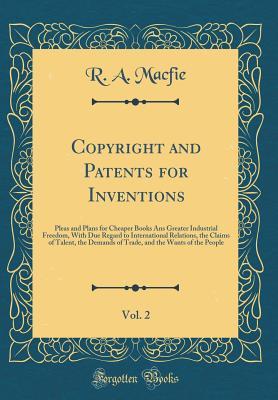
Copyright and Patents for Inventions, Vol. 2: Pleas and Plans for Cheaper Books ANS Greater Industrial Freedom, with Due Regard to International Relations, the Claims of Talent, the Demands of Trade, and the Wants of the People (Classic Reprint)
Patents, Trademarks, and Copyrights: The Basics - Investopedia
Copyright And Patents For Inventions: Pleas And Plans For
Copyright and Patents for Inventions: Pleas and Plans for
LegalZoom: Legal Help Is Here - Find The IP Protection For You
Copyright and patents for inventions : Macfie, Robert Andrew
Copyright And Patents For Inventions ebook PDF Download and
Copyright and patents for inventions : pleas and plans for
Copyright & Patents - Find The IP Protection For You
Dealing with Patents, Copyrights, Trademarks and Trade
The Difference Between Copyright and Patent – CJAM
The Economic Theory Concerning Patents for Inventions
Protect Your Business with Patents, Copyrights and Trademarks
Difference Between Copyright and Patent Compare the
WHAT’S THE DIFFERENCE BETWEEN A PATENT, A TRADEMARK, AND A
Patents and Copyrights: Everything You Need to Know SCORE
Innovation and Intellectual Property - WIPO
Inventions, Intellectual Property, Copyright and OTT
3361:10-19-01 Patents and copyrights: Policy on inventions and
Protection of intellectual property and trade secrets - Government.nl
Patent Invention - Get Help With Your Idea - Protect Your Idea
Patents Trademarks, and Copyrights: An overview of
Contract for Assignment Online - Patent Rights Form
Patents and Intellectual Property - Heidelberg University
Intellectual Property - Napster And Intellectual Property, Copyrights
Advantages and disadvantages of getting a patent nibusinessinfo
How Patents Differ from Copyrights and Trademarks - FindLaw
Assignment of Rights Under - Patent Application and Patents
Guide to Intellectual Property - Canadian Association for Graduate
Trademarks, Copyrights, Patents: Invention Guide for Kids
How to Patent an Idea and Become an Inventor legalzoom.com
Law Regarding the Rights to Inventions Made by Employees
A Young Inventor's Guide to Trademarks and Patents
Patents, Trademarks, Copyrights, and Trade Secrets
Federal Register :: Rights to Federally Funded Inventions and
Why Patents and Copyright Protections Are More Important Than
Dear USPTO: Patents for Inventions by AI Must Be Allowed
Patents for inventions: introduction (Chapter 12
The Invention Experts - Patent Invention - idea.davison.com
Introduction to patents, trademarks and copyright BDC.ca
Invention Patents: How to patent inventions and patent help
15 Patents That Changed the World - Popular Mechanics
9.1 Inventions, Patents, and Licensing DoResearch
Patent, Trademark, and Trade Secret - FindLaw
Difference between trademark, copyright and patent
How Trademarks Differ from Patents and Copyrights, Patents
Patents, Trademarks & Copyrights — Patent, Trademark and
PATENTS DESIGNS COPYRIGHT AND TRADEMARKS
Inventions, patents and copyright Editor's choice Tools
Patent Invention - Get Help With Your Idea - idea.davison.com
Patent and Copyright Faculty Handbook
Patents For Inventions - Search Patents For Inventions
Intangible rights protecting the products of human intelligence and creation, such as copyrightable works, patented inventions, trademarks, and trade secrets.
17 nov 2018 copyrights protect expression and creativity, not innovation.
Other types of protection: copyrights; trademarks; trade secrets; biomaterials.
It recognizes that protection of proprietary rights in the form of a patent or copyright are often necessary - particularly with inventions derived from basic research - to encourage a company to risk the investment of its personnel and financial resources to develop the invention.
Particular species of patents for inventions include biological patents, business method patents, chemical patents and software patents. A patent is often referred to as a form of intellectual property right, [10] [11] an expression which is also used to refer to trademarks and copyrights� [11] and which has proponents and detractors (see also.
Copyright and patents for inventions: pleas and plans for cheaper books and greater industrial freedom, with due regard to international relations, people, volume.
There are several steps to applying for and receiving a patent. The united states government is responsible for granting patents.
As the owner of the patent you have patent rights and do not have to actually use or make your invention, you still have the right to exclude others from making and using your patented invention. You must apply for a patent (or hold your place in line for one year with a provisional patent application) if you want patent rights.
Patents only protect inventions that are novel and inventive at the time of applying for patent protection.
For utility patents, which are the most common patent type, patent protection lasts for 20 years after the filing date of the patent application. (if an application for a utility patent was filed before june 8, 1995, patent protection lasts for the same 20-year period or for 17 years after the patent was granted, whichever provides longer.
Copyright protection depends on national legislation and thereby differs in each country. At the time of the copyright owner’s death, the copyright can be left to whomever they wish. What is a patent? patents are intellectual property rights granted to inventions.
17 jun 2019 in canada, the first applicant to file a patent application for an invention will be entitled to obtain patent protection for that invention.
The proprietor may not necessarily be the inventor, as many large companies own patents that are invented.
The rules pertaining to employee inventions are not limited to patents, but apply to other kinds of intellectual property rights. In one case, for example, university professors devised a process for producing milk by introducing beneficial bacteria.
A patent for an invention is the grant of a property right to the inventor. Patents are granted for new, useful and non-obvious inventions for a period of 20 years from the filing date of a patent application, and provide the right to exclude others from exploiting the invention during that period.
The patent committee shall make recommendations regarding those inventions on which patent applications will be filed and the disposition of patent rights involved, shall recommend arrangements for prosecutions of patents and commercialization of inventions, and shall consider and make recommendations on special patent, trade secret, trademark, copyright, and publication matters submitted to it for resolution. The university may obtain services from one or a combination of the following.
Patent offices around the world should tighten standards to ensure that only inventions truly worthy of protection receive it, thereby reducing the amount of litigation involving flawed patents.
Computer software or programs are instructions that are executed by a computer. Software is protected under copyright law and the inventions related to software.
It establishes a filing date, and it gives an inventor the right to market an invention for up to one year as patent pending.
Adopted by the president and fellows of harvard college on november 3, 1975 as the “statement of policy in regard to inventions, patents, and copyrights”.
A patent is a right, granted by the government, to exclude others from making, using, or selling your invention. Patents protect inventions such as new processes, machines, or chemicals. The central idea is that patents protect ideas, not just expressions of them.
18 jul 2019 before we dive in, here's a quick overview on patents and copyrights: a patent protects inventions and designs, like engines or a phone casing,.
Design patents resulting from applications filed on or after may 13, 2015 have a 15 year term from the date of grant; however, patents issued.
The main requirements for obtaining a patent are that the invention be novel and unobvious, and that the invention be fully disclosed in the patent application. In general, to be novel, an invention must not have been publicly known of or used anywhere in the world prior to the date that the inventor made the invention.
Patents allow the creator of certain kinds of inventions that contain new ideas to keep others from making commercial use of those ideas without the creator's permission.
However, once your patent is granted, your invention or design will be protected for 14 to 20 years depending upon the patent type. After receiving the patent, remember that the inventor must enforce the patent after it is issued. You also may want to consider avoiding patent promoter scams or invention promotion companies.
The ownership of any invention made by an employee in the course of his or her employment vests in the employer. However, should the invention be patented, the employee is entitled to a fair share of the benefit that the employer has derived, or may reasonably expect to derive, from the patent.
Contrary to a common public misconception, a patent is not a right to practice or use the invention. Rather, a patent provides the right to exclude others from making, using, selling, offering for sale, or importing the patented invention for the term of the patent, usually 20 years from the filing date. A patent is, in effect, a limited property right that the government offers to inventors in exchange for their agreement to share the details of their inventions with the public.
Before we dive in, here’s a quick overview on patents and copyrights: a patent protects inventions and designs, like engines or a phone casing, and a copyright protects original artistic and literary works, like songs or books. If you want a little more detailed refresher, be sure to check out our ip primer from earlier this month.
While a patent, with the exclusion of a design patent, protects inventions of new processes, copyright protects published and unpublished original works, including works in literature, music, art, architecture, software, and choreography. Like a patent holder, the copyright owner has exclusive rights, including the right to reproduce, make.
7 feb 2020 application: request for patent protection for an invention filed with the epo or intellectual property (ip): creations of the mind or intellect.
A patent protects inventions with a new or improved function. This includes machines, processes, or chemical compositions, or the design for some product.
Copyright and patents for inventions� pleas and plans for cheaper books and greater industrial freedom, with due regard to international relations, the claims of talent, the demands of trade, and the wants of the people being a sequel to recent discussions on the abolition of patents for inventions, with suggestions as to international arrangements regarding inventions and copyright, 1869.
World intellectual property indicators (pdf) show that the total number of patent the disclosure of the invention is an essential consideration in any patent.
Intellectual property (ip) is any work or invention that is the result of creativity, such as a manuscript or design, and can be protected by statute or legislation, such as patent or copyright. It includes inventions, discoveries, know-how, show-how, processes, unique materials, copyrightable works, original data, and other creative or artistic works.
However, since patents are about unique details, prior art that superficially overlaps the broad concept of the invention may not prevent a patent from being issued on the details of that invention. Knowledge of prior art can help to improve an invention - that, in fact, is one of the main reasons for the entire patent system.
The form alerts both bnl and the department of energy to new discoveries and enables a patent.
Patents protect an invention or a technical product or process. It is unlawful for others to make, use, resell, rent out, or supply the patented object or process.
Through a patent, the government gives you, the inventor, the right to stop others from making, using or selling your invention from the day the patent is granted.
Patent law incentivizes inventors to publicly disclose their inventions in exchange may fall within the subject matter protected by both patents and copyrights.
Patents are generally granted on criteria such as their novelty, utility and ingenuity, or in simpler terms if they are new, useful and not obvious to someone skilled in the relevant field. Patents generally cover new inventions or improvements to existing inventions, and are not to be confused with trademarks, which are explained below.
When a patent is filed, the owner gets an exclusive right to prevent others from making, using, selling, or importing the protected invention.
A patent-eligible invention that is novel, useful, and non-obvious. Any word, phrase, symbol, logo, or other devices that differentiates the source of goods or services from others. Original works of creative expression that have been fixed in a tangible medium, such as artistic output or technical work products.
Intellectual property (ip) is any work or invention that is the result of creativity, such as a manuscript or design, and can be protected by statute or legislation, such.
Patents are legally enforceable and gives the owner the exclusive right to commercially exploit the invention for the life of the patent. The innovation patent is a protection option which is designed to protect inventions that are not sufficiently inventive.
Inventors make money on their intellectual property—which is more than patents. If your invention is a new formula or process to make a machine, then consider keeping it secret. If your invention involves software code that you have authored, then you can rely on the copyright for your code.
An inventor who wishes to obtain a patent would first have his or her attorney conduct a “patentability” search to determine if a patent is available for the invention.
Any product derived from an idea—appeared as early as 500 bce, when greek chefs were granted year-long exclusive rights for creating.
Patent office reviews it to ascertain if the invention is new, useful, and nonobvious and, if appropriate, grants a patent - usually two to five years later. Not all patents are necessarily valuable or impervious to challenge.
This grant provides the inventor exclusive rights to the patented process, design, or invention for a designated period in exchange for a comprehensive disclosure of the invention.
• copyright covers the works of authorship like literary, musical and dramatic work. On the other hand, patent protects those inventions that are new and useful. • copyrights are arts based while patent are science-based protections. • to apply for copyright� authorship must be original and real medium.
Inventions protected by utility patents include any new and useful process, machine, manufacture, or composition of matter. Inventions can be electrical, mechanical, or chemical in nature. Examples of inventions protected by utility patents are a microwave oven, genetically engineered bacteria for cleaning up oil spills, a computerized method of running cash management accounts, and a method for curing rubber.
16 apr 2020 whether you're an inventor, a writer or an artist, you need to know what these each mean — and which you need to protect your work.
As an institution of higher learning, the university of cincinnati is concerned.
In order to be eligible for patent protection, united states patent law requires that an invention be: new or novel. The invention must be demonstrably different from publicly available ideas, inventions or products (so-called “prior art”). This does not mean that every aspect of an invention must be novel.
An invention is a new solution to a technical problem and can be protected through patents. Patents protect the interests of inventors whose technologies are truly groundbreaking and commercially successful, by ensuring that an inventor can control the commercial use of their invention.
We use cookies to distinguish you from other users and to provide you with a better experience on our websites.
For a utility patent, the term is generally 20 years from the earliest filing date of the application. For design patents (based on decorative, non-functional features) the term is 15 years from the issue date. Infringement occurs if the new invention falls within the claims of a granted patent.
24 dec 2019 patenting of extracts from indigenous plants, animals and organisms, already known to indigenous people, has been called biopiracy.
There's a crucial step any inventor or artist should take before taking it to market: protecting it with a patent, trademark, or copyright from the government.
The focus of the guide is on information and technology disclosed in patent documents. Designed for self-study, the guide provides easy-to follow training modules that include teaching examples and other useful practical tools and resources.
Invention conventions – learn how to host an invention convention at your school or neighborhood. Invention facts and trivia – check out a series of fun facts about inventions and the people who make them. Diy projects for kids – a series of tutorials will help guide you through a number of fun and wacky projects and inventions.
Many innovations can be protected through intellectual property (ip) rights.
While a patent, with the exclusion of a design patent, protects inventions of new processes, copyright protects published and unpublished original works, including works in literature, music, art, architecture, software, and choreography. Like a patent holder, the copyright owner has exclusive rights, including the right to reproduce, make derivatives, distribute copies, display the work in public, or perform the work publicly.
Post Your Comments: