Read online Thinking with Literature: Towards a Cognitive Criticism - Terence Cave file in ePub
Related searches:
Thinking with Literature: Towards a Cognitive Criticism by
Amazon.com: Thinking with Literature: Towards a Cognitive
Thinking with Literature: Cave, Terence: 9780198824640
Terence Cave, Thinking with Literature: Towards a Cognitive
Terence Cave. Thinking with Literature: Towards a Cognitive
Thinking with Literature: Towards a Cognitive Criticism by Terence
Thinking with Literature University of Oxford Podcasts - Audio and
Thinking with Literature: Towards a Cognitive Criticism. By
The two most general types of literature are fiction and nonfiction. Fiction is literature created through the author's imagination, while nonfiction is li the two most general types of literature are fiction and nonfiction.
Thinking with literature: towards a cognitive criticism concludes with a virtual manifesto for a cognitive approach in literary studies (155-57) listing twelve essential findings in his important and challenging study.
Afrocentricity and understanding african literature: towards re-stating and re-ignition of african thinking in the criticism of zimbabwean literature european journal of literature, language and linguistics studies - volume 2 │ issue 2 │ 2018 77 literature.
30 dec 2016 the authors propose a model of teaching critical thinking skills focused on the reader's response to a literary work.
To speak of 'thinking with literature' is to make the assumption that literature (in the broadest sense) is neither a side-show nor a side-issue in human.
Of african thinking in the criticism of zimbabwean literature. Toward the decolonization of african literature: african fiction and poverty.
Literature and critical literacy pedagogy in the efl classroom: towards a model of teaching critical thinking skills jelena bobkina complutense university of madrid, spain jbobkina@filol. Es svetlana stefanova international university of la rioja, madrid, spain svetlana.
Thinking with literature: towards a cognitive criticism by terence cave 2016-03 -17: amazon.
The literature points to the importance of critical systems thinking approaches during it adoption in organisations.
To speak of 'thinking with literature' is to make the assumption that literature (in the broadest sense) is neither a side-show nor a side-issue in human cultures: it belongs to the spectrum of imaginative modes that includes both philosophical and scientific thought.
‘penser la littérature’ (thinking with literature) published in interprétation littéraire et sciences cognitives (2016), a collection of scholarly articles edited by françoise lavocat. Thinking with literature: towards a cognitive criticism is a further attempt to chart the territory of cognitive literary theory.
28 apr 2016 a book at lunchtime discussion with terence cave about literature's links to cognitive science.
Thinking with literature consists of two expository chapters and seven chapters with extended close readings spearheaded by different cognitive activities, such as the kinesic response, imagination, mimesis/representation, immersion, and underspecified world-building, among others. Cave is particularly interested in readers’ somatic reaction to a text, that is, literature’s ability to transmit motor activation via the reader’s mirror neurons, creating in the reader a neural readiness.
13 mar 2020 thinking veganism in literature and culture: towards a vegan theory.
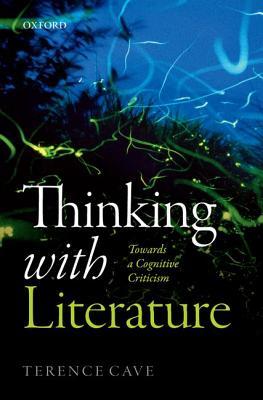
Whether one regards it as a practice or as an archive, literature is highly pervasive, robust, enduring, and pregnant with values. Thinking with literature argues that what it affords above all is a way of thinking, whether for writer, reader, or critic.
Thinking with literature offers a succinct introduction to a cognitive literary criticsm, broad in scope but focusing on a particular cluster of approaches, some of which (kinesis, relevance theory) have so far been little used.
The three major types of literature are drama, epic and lyric. Plato, aristotle and horace originally conceived of the three genres. The three major types of literature are drama, epic and lyric.
Whether one regards it as a practice or as an archive, literature is highly pervasive, robust, enduring, and pregnant with values. Thinking with literature argues that what it affords above all is a way of thinking, whether for writer, reader, or critic. Literature constitutes one of the prime instruments of cultural improvisation; it is the embodiment of a powerful, inventive, and ever-changing cognitive agency.
A literature review summarizes and synthesizes the existing scholarly research on a particular topic. Hero images / getty images a literature review summarizes and synthesizes the existing scholarly research on a particular topic.
It also has subsections of prose, fiction, myths, novels a the two types of literature are written and oral.
Buzzfeed staff keep up with the latest daily buzz with the buzzfeed daily newsletter!.
The authors propose a model of teaching critical thinking skills focused on the reader's response to a literary work.
Gain insight on what literature gives us, from communication skills to cultural insight and from empathy to the ability to move us emotionally. Literature is a term used to describe written and sometimes spoken material.
This book argues that, as literature is among the most powerful and flexible instruments of human thought, it invites a cognitive mode of criticism, one which asserts the priority of individual literary works as unique products of human cognition.
Post Your Comments: