Download Studies in Ancient Egyptian Funerary Literature - S Bickel file in ePub
Related searches:
Studies of ancient egyptian burial customs often concentrate on inscribed objects of the funerary industry.
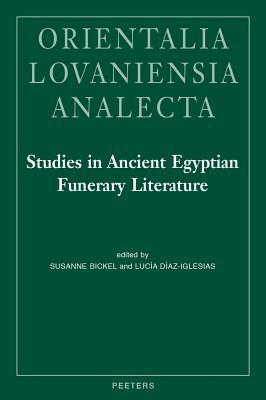
Studies in ancient egyptian funerary literature edited by susanne bickel and lucía díaz-iglesias ancient egyptian funerary literature encom-passes a complex, dynamic, and open group of texts and images selected to be deposited in mortuary settings. The contributions in this volume offer new theoretical and methodological perspectives to evaluate.
Mariam ayad, associate professor of egyptology, the american university in cairo visiting associate professor of women's studies and near eastern religions.
May 7, 2020 known for their iconic pharaohs, pyramids and elaborate burial rituals, the ancient egyptians were notoriously assiduous about the afterlife.
This book explores the development of tombs as a cultural phenomenon in ancient egypt and examines what tombs reveal about ancient egyptian culture and egyptians’ belief in the afterlife. Investigates the roles of tombs in the development of funerary practices draws on a range of data, including architecture, artifacts and texts discusses tombs within the context of everyday life in ancient.
The ancient egyptians had an elaborate set of funerary practices that they believed were necessary to ensure their immortality after death.
Sir alan gardiner (1935a) in his classic essay, the attitude of the ancient egyptians to death and the dead, praised the writer of these lines as being among the few thoughtful ones who discerned the truth. Yet the thinking behind this advice remains within the confines of human time and ignores other aspects of egyptian beliefs regarding the dead.
Throughout their history, the ancient egyptians believed in life after death, and that you would be judged by osiris, the god of the afterlife, the underworld, and the dead. It was important to prepare the dead bodies for eternal existence in joy and happiness. Numerous tombs of various styles and dates containing carefully prepared bodies and a variety of funerary goods reveal an ancient.
Another popular funerary practice common to egyptian culture was the funerary mask. One of the most popular funerary masks is the “mask of tutankhamun” from the 18 th dynasty around 1327 bce, who we will be looking at in this exhibition.
Beautifully preserved life-size painted limestone funerary sculptures of prince rahotep and his wife nofret.
Ancient egyptian funerary literature encompasses a complex, dynamic, and open group of texts and images selected to be deposited in mortuary settings.
Magical bricks in ancient egypt: a study of funerary rituals through the book of the dead. Ehab gamil the sorcery text of chapter 151 deals with the position of four types of magical bricks lined up in the burial chamber inside the four niches that has been carved in the walls of the tomb.
The ancient greek hero cult was also a funerary cult; in the original sense, a hero was a deified or semi-divine ancestor, worshiped at a shrine for his power to assist the living. The ancient greek religion had three main aspects: the gods, the heroes, and the dead.
The british museum studies in ancient egypt and sudan (bmsaes) is a peer-reviewed, academic publication. Bmsaes is dedicated to presenting research on aspects of ancient egypt and sudan and the representation of those cultures in modern times.
Suche: studies in ancient egyptian funerary literature treffer 1 - 20 treffer von 20 für suche ' studies in ancient egyptian funerary literature '� suchdauer: 0,03s sortieren relevanz nach datum, absteigend nach datum, aufsteigend person/institution titel.
By: samantha paper looks at how these burial practices connect to the ancient egyptians religious beliefs.
If one wants to explore man's humanity in ancient egypt nothing is more helpful when one studies egyptian statuary from this point of view, a surprisingly large.
Jan 16, 2021 the research described in this paper is part of a larger project that analyzes ancient egyptian funerary monuments from the late period located.
New discoveries and research are helping us learn more about the ancient past.
Today we are still learning about ancient egyptian burial practices through objects found in the tomb.
Death, burial, and the afterlife were as important to the ancient egyptians as how they lived. This well-illustrated book explores all aspects of death in ancient.
Abydos temple • abydos /əˈbaɪdɒs/ is one of the oldest cities of ancient egypt, and also of the eighth nome in upper egypt, of which it was the capital city. 8 miles) west of the nile at latitude 26° 10' n, near the modern egyptian towns ofel-'araba el madfuna and al-balyana.
Diaz-iglesias, 9789042934627, available at book depository with free delivery worldwide.
Presenting fascinating new findings on ancient romano-egyptian funerary portraits preserved in international collections.
Her research investigates the socioeconomic and political turmoil that have plagued the period, ultimately affecting funerary and burial practices in ancient egypt.
For the 2020 – 21 academic year, ayad is visiting associate professor of women’s studies and near eastern religions and research associate in women’s studies in religion program at harvard divinity school. She is currently exploring the impact of class and gender on ancient egyptian conceptions of death, revival, and the afterlife.
Stone sculptures created by ancient egyptian craftsmen are some of the most impressive and informative remnants of the ancient world. Sculptors had an important role in ancient egypt as they carved substitute bodies for the tomb, small funerary statuettes and tombstones.
May 20, 2020 several ancient egyptian coffins and mummy cases have been found covered in a dr kate fulcher, research assistant in the museum's department of been used and what it can reveal about egyptian funerary practice.
Com: studies in ancient egyptian funerary literature (orientalia lovaniensia analecta) (9789042934627): bickel, s, bickel, s, díaz-iglesias, l: books.
The ancient egyptians had an elaborate set of funerary practices that they believed were necessary to ensure their immortality after death. These rituals included mummifying the body, casting magic spells, and burials with specific grave goods thought to be needed in the afterlife.
An ancient egyptian tomb, sarcophagus and funerary artifacts could soon be accessible through virtual reality.
Over time, the ancient egyptians developed “mummification”, which included the earliest embalmment and wrapping in linen. For the wealthiest in egypt, the desert graves eventually evolved into structures made of stacked mud bricks called mastabas� then into step pyramids, and finally into the true pyramids we picture today.
Feb 22, 2019 used to bury leaders and wealthy residents in ancient egypt, rome, and anthropology, archaeology, social studies, ancient civilizations king tutankhamun was laid to rest here in this well-decorated burial chamber.
Those mysterious secrets of spellbinding rituals in ancient egypt amazed the archaeologists and scientists. New studies revealed more interesting facts about their funerary practices according to sputnik.
Ancient egyptian funerary literature encompasses a complex, dynamic, and open group of texts and images selected to be deposited in mortuary settings. Despite this shared final purpose, they derive from a variety of spheres of origin (ritual,.
), religion and philosophy in ancient egypt, yale egyptological.
The most famous of these are the pyramids of giza, a series of funerary pyramids built to hold the remains of the pharaohs khufu, khafre, and menkaure.
First evidence of ancient egyptian funerary garden found in luxor researchers have theorized that lettuce and palm trees were once planted there to honor the dead�.
Death - death - ancient egypt: two ideas that prevailed in ancient egypt came to exert great influence on the concept of death in other cultures. The first was the notion, epitomized in the osirian myth, of a dying and rising saviour god who could confer on devotees the gift of immortality; this afterlife was first sought by the pharaohs and then by millions of ordinary people.
Post Your Comments: