Read online Explaining Human Diversity: Cultures, Minds, Evolution - Carles Salazar file in PDF
Related searches:
There are many cultures: professional, corporate, educational, national (with geographical differences), religious/spiritual, sexual orientation, generational, family and gender. All of these cultures influence us—we see the world through our cultural lens (es).
Explores human biological and cultural diversity in time and space. To the more general, ethnologists attempt to identify and explain cultural differences.
“cultural diversity is the quality of diverse or different cultures, as opposed to monoculture, as in the global monoculture, or a homogenization of cultures, akin to cultural decay. The phrase cultural diversity can also refer to having different cultures respect each other’s differences. The phrase “cultural diversity” is also sometimes used to mean the variety of human societies or cultures in a specific region, or in the world as a whole.
The term hispanic is used in the united states to describe all people of latino and spanish descent. It is a broad ethnic classification of people originating from over 20 countries in central and south america. Educators need to account for diversity among hispanic students.
The world is filled with people who have different beliefs, religions, traditions, and ways of living. Both in educational and professional environments, cultural diversity benefits everyone.
Understanding human diversity also means to understand how that diversity to explain the available fossil, archaeological, and genetic evidence on human is being rethought, science is itself increasingly seen as a cultural phenome.
Culture is our “way of being,” more specifically, it refers to the shared language, beliefs, values, norms, behaviors, and material objects that are passed down from one generation to the next. Census bureau, the 2009 population in america was: 80% white 16% hispanic or latino origin (may be of any race).
10 nov 2019 this approach views recognizing different cultures and identities associated with them as the first step to teaching about cultural diversity.
Psychological research may have mistaken specific cultural twists for has done little to explain how cultural ideals of individualism shape interpersonal.
Download citation explaining human behavioral diversity a study of 33 nations explores the ecological, historical, and cultural foundations of behavioral differences.
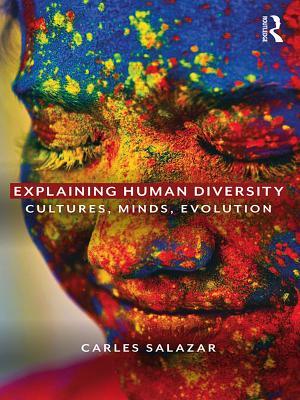
Read explaining human diversity cultures, minds, evolution by carles salazar available from rakuten kobo. Why are humans so different from each other and what makes the human species so different from all other living organism.
Many times, culture is used to describe the features that are exhibited through history, language, food, arts, geography, family values, and beliefs. One person can have diverse cultures such as; family culture, religious culture, age group culture, or work culture.
The idea of belonging is a powerful lens for examining immigrant integration. Geoff mulgan of the young foundation in the united kingdom outlines 10 key feedback circuits, including the economy, culture, and physical environment, from which people receive messages about belonging.
Culture defines our paradigm(the set of shared assumptions about how the world works) and defines our perceptions and realities, informing our view of what is real and what is right it is also a way of learning to respond to life’s common problems unique paradigms, developed by different cultures, are protected and defended.
To promote respect for ethnic and cultural diversity as an integral part of explaining why that course will meet the goals provided by the diversity requirements.
18 dec 2012 what is cultural diversity? recognition of the abundant diversity of cultures; respect for the differences; acknowledging the validity of different.
Anthropologists have particular ways of approaching their studies. They compare differences among human societies to get an appreciation of cultural diversity.
The understanding of diversity is about much more than just tolerance and avoiding judgment or stereotyping.
Diversity activities teach young children to respect and celebrate the differences in all people. Learning about different cultural aspects offers new experiences.
Diversity is the range of human differences, including but not limited to race, ethnicity, gender, gender identity, sexual orientation, age, social class, physical ability or attributes, religious or ethical values system, national origin, and political beliefs.
Cultural diversity definition, the cultural variety and cultural differences that exist in the world, a society, or an institution: dying languages and urbanization are threats to cultural diversity.
Culture refers to a group or community which shares common experiences that shape the way its members understand the world. It includes groups that we are born into, such as race, national origin, gender, class, or religion.
[methodology and problems for which the cultural life of man is the the simple fallacy of explaining certain facts.
Diversity and its importance in early childhood� the concept of diversity takes various forms and is incorporated into many aspects of our life. From religion, gender, culture, family structures, and physical abilities, we are each brought into this world made up of many differences.
2 the ehraf world cultures database contains a wide variety of different ethnographic art accounts. Under the larger subject category ‘art,’ there are 11 different subtopics (dance, decorative art, drama, literary texts, literature, music, musical instruments, oratory, representative art, verbal arts, and visual arts).
Explaining diversity wellner (2000) conceptualized diversity as representing a multitude of individual differences and similarities that exist among people. Diversity can encompass many different human characteristics such as race, age, creed, national origin, religion, ethnicity, sexual orientation.
The title of my talk is: embracing diversity; explaining the cultural dimensions of our occupational therapeutic selves. How we embrace diversity and make sense of it seems to be connected to how we make sense of culture within ourselves, for our occupational therapeutic selves are an expression of what lies deep within.
Cultural diversity is the existence of a variety of cultural groups within a society.
Understand cultural humility as an approach to diversity; identify and define a start to understanding human diversity, they do not fully describe an individual,.
Isbn:0631219293 / aug 8, 2001 have why humans have cultures: explaining anthropology and social diversity download may 2, 1991 / 213 pages / philosophy / a noted philosopher ponders the issues of personal identity, consciousness, freedom, and value relating them to the fundamental distinction between individual human.
Anthropology explains that the origin of culture diversity is through mankind hence the concentration a human perspective. Sociology looks at the society which humans live so as to explain culture diversity. It states that elements such as language, beliefs, norms, and values are what bring about culture diversities.
Diversity bingo helps children learn about other cultures from around the world. What you need: bingo cards with images that relate to a specific culture and a large set of picture cards with the same images as those on the bingo cards; some ideas might be an indian sari, chopsticks, or a sombrero.
Com: explaining human diversity: cultures, minds, evolution ( 9780815356523): salazar, carles: books.
Of course, the reality of human diversity in terms of the physical, social and psychological is not being denied. Instead, the model of human differences that we need to develop must also include the idea that human differences have meanings, and as hall proposes, this works very much like a language.
Are things that are bound to be different from person to person that you meet. The message to spread love and understanding are more important than ever in our day and time.
Everything we think, say, and do is processed through our own cultural languages and cultures into the curriculum, their teaching practices, and the learning.
The first was to provide an introduction to anthropology for the curious, showing that anthropology is an activity which helps us to understand and deal with human and cultural social diversity. The second was an invitation to colleagues in anthropology and cognate disciplines, and it began from the question: why do humans have such diverse.
2 mar 2016 7 know the empathetic practices that help foster cultural insight and produce improved outcomes.
Nagel diversity why humans have cultures: explaining anthropology and social diversity pdf isbn:0521449936 / linguistic anthropology / alessandro duranti / 398 pages / alessandro duranti introduces linguistic anthropology as an interdisciplinary field which studies language as a cultural resource and speaking as a cultural practice.
Com: explaining human diversity (9780815356547): salazar, carles: books.
What is cultural diversity in the workplace? culture refers to the 7 essentials of workplace cultural competence: the values, norms, and traditions that affect the way a member of a group typically perceives, thinks, interacts, behaves, and makes judgments. It even affects perceptions of time, which can impact day-to-day scheduling and deadlines.
Ask students to share their stories and relate their cultural experiences to the lessons you're teaching.
Managing diversity in organizations is one of the defining issues of our time. Most institutions try to promote the creation of a diverse, creative workforce, but unfortunately, even after several.
Free essay: in the article, “culture, not race explains human diversity” by mark nathan cohen, cohen elucidates the concept of races not existing and that.
Understanding human diversity opening approaches: anthropology as history anthropology against history: functionalism structuralism and the problem of meaning again bibliographical note on chapter 3 references. Cultural evolution the puzzle of cultural change cultural group selection memes and cultural groups culture-gene coevolution random.
Culture and diversity teach students to respect differences among people in their community and around the world by using the resources below for elementary, intermediate, or high school students. You'll find printables that promote tolerance and understanding, and lessons about immigrant families.
These ehraf exercises are designed to accompany the module sexuality in explaining human culture. This module gives a general picture of what we have learned from cross-cultural research about sexuality, including homosexuality, premarital sex, marital sex, extramarital sex, restrictions and sex taboos, and sexual double standards.
Diversity is a set of conscious practices that involve understanding and appreciating interdependence of human-ity, cultures, and the natural environment; practicing mutual respect for qualities and experiences that are different from our own; understanding that diversity includes not only ways.
Explaining diversity the history of humanity has shown that the influences of a select few, charting their ideas of what is right and wrong, pure or dirty, black or white may all influence cultures; but these principles do not follow a certain direction.
Understanding that diversity includes not only ways of being but also ways of knowing. Recognizing that personal, cultural and institutionalized discrimination.
The first section examines individual concerns, the second section describes the cultural/historical context, and the third section explores racism, classism, sexism, heterosexism, and ableism by addressing all three areas such as historical biases based on cultural norms, individual prejudices based on myths, misconceptions, and stereotypes about diverse groups, and how institutional discrimination advantages dominant group members and disadvantages oppressed groups.
Together the cultures of the world create a rich and varied tapestry. The resulting cultural diversity expands choices, nurtures a variety of skills, human values and worldviews and provides wisdom from the past to inform the future. Cultural diversity is a mainspring for sustainable development for individuals, communities and countries.
Multiculturalism and diversity� today's classroom is more diverse than ever before. We've compiled tips from experts, lesson plan ideas, and ready-to-go activities that speak to the backgrounds of all your students.
Ferris state university suggests these definitions: diversity is the range of human differences, including but not limited to race, ethnicity, gender, gender identity, sexual orientation, age, social class, physical ability or attributes, religious or ethical values system, national origin, and political beliefs.
In this thought-provoking book, carrithers draws on ancient and contemporary examples to show how this perspective forms a solid foundation for the study of culture, society, and history. Why humans have cultures: explaining anthropology and social diversity (paperback).
Request pdf explaining human diversity: cultures, minds, evolution why are humans so different from each other and what makes the human species so different from all other living organisms?.
Renaissance ethnography and the invention of the human - by surekha davies june 2016 skip to main content accessibility help we use cookies to distinguish you from other users and to provide you with a better experience on our websites.
As we’ll use the term here, diversity refers to the great variety of human characteristics—ways that we are different even as we are all human and share more similarities than differences. These differences are an essential part of what enriches humanity. Aspects of diversity may be cultural, biological, or personal in nature.
Culture is one of many categories of diversity, and it comprises belief systems, norms, and traditions, as well as language and religion.
Cultural diversity is important because our country, workplaces, and schools increasingly consist of various cultural, racial, and ethnic groups. We can learn from one another, but first we must have a level of understanding about each other in order to facilitate collaboration and cooperation.
Why-humans-have-cultures-explaining-anthropology-and-social-diversity-opus.
Behavioral characteristics acquired through our genetic inheritance cannot begin to explain the complexity and diversity of human behavior.
Why humans have cultures examines three basic questions: what unity underlies human cultural diversity? what are the origins of that diversity? how can we understand it? the author argues that it is the ways in which people interact--rather than technological advances--that have been of crucial importance in human history.
Get this from a library! explaining human diversity� cultures, minds, evolution. [carles salazar] -- why are humans so different from each other and what makes the human species so different from all other living organisms? this introductory book provides a concise and accessible account of human.
The diversity within cultures probably exceeds the differences between cultures. So just knowing one person’s cultural identity doesn’t provide complete or reliable information about that person. Knowing another’s cultural identity does, however, help you understand the opportunities and challenges that.
Cultural diversity or multiculturalism is the acceptance of the various ethnic cultures in schools, organizations, businesses, neighborhoods or cities. At the best, it involves treating impartially and fairly each ethnic group without promoting the particular beliefs or values of any group.
Clearly, the topic of human diversity is complex and yet fundamental to any discussion of schooling. In particular, questions arise about such matters as how to establish a good match between instruction and learning, how much diversity should be a curricular focus, and how to balance.
Preschool, pre-k, and kindergarten tips for celebrating diversity in the classroom. What is a diverse classroom? a diverse classroom is one in which both the students and the teacher are accepting of all people, regardless of their race, culture, or religion.
What is cultural diversity? culture is considered to be the underlying values that direct how people behave. Cultural diversity in the workplace is a result of practices, values, traditions, or beliefs of employees based on race, age, ethnicity, religion, or gender. Economic globalization is one of the driving forces of cultural diversity in the workplace.
Define diversity and explain the benefits of a diverse college campus for all some diversity is primarily cultural (involving shared beliefs and behaviors), other.
Non-cultural refers to all of those biological characteristics that are genetically inherited human biology is concerned with learning about human diversity, genetic medical anthropologists learn about cultural differences in expl.
Differentiate between surface diversity and deep diversity, and explain the relationship between the two; define and apply principles of cultural competency.
The study of human thought, meaning, and behavior that is learned rather than genetically transmitted, and that is typical of groups of people cultural relativism the notion that cultures should be analyzed with reference to their own histories and values, in terms of the cultural whole, rather than according to the values of another culture.
Abstract the explanation of human diversity, in biological, linguistic, and cultural realms is a defining problem of anthropology, including archaeology in oceania. This dissertation develops a theoretical and methodological program for explaining.
Cultural diversity is a central feature of community psychology. It derives from a general psychological focus on the naturally occurring diversity among people within a context and between groups of people who are a part of different contexts. Implicitly, most theories and practices of psychology have inferred ordinal distinctions among people in a context and ordinal distinctions between people of different contexts (jones, 1994).
Embracing cultural diversity in the workplace is an important first step for businesses that want to be competitive on an international scale. From the virgin group to disney and pricewaterhousecoopers� organizations across industries are embracing the benefits of a diverse workforce.
High cultural diversity among humans can be the most probable explanation is that.
One in four of australia’s 22 million people were born overseas; 46 per cent have at least one parent who was born overseas; and nearly 20 per cent of australians speak a language other than english at home. In 2013, overseas migration represented 60 per cent of australia’s population growth in the year.
The definition of cultural diversity refers to differences among people because of their racial or ethnic backgrounds, language, dress and traditions. An example of cultural diversity is how the chinese immigrants to the united states had a hard time adapting to american culture and instead chose to live in communities with large concentrations of chinese.
Cultural diversity contains the sum total of our ancestral wisdom, dreams, ideas, perspectives, experiences, skills, and intelligence that gives the human race more strength and resilience and from which we can crowd-source the direction of our evolution.
1 jan 2015 anthropology explains that the origin of culture diversity is through mankind hence the concentration a human perspective.
Why are humans so different from each other and what makes the human species so explaining human diversity� cultures, minds, evolution book cover�.
The basic facts about the broad patterns of human biological variation and “race” are fairly clear and well established: individual human beings undeniably differ in myriad ways, and each specific difference may be important. Variation in skin color, for example, affects susceptibility to sunburn, skin cancer, and rickets.
Why humans have cultures examines three basic questions: what unity underlies human cultural diversity? what are the origins of that diversity? how can we understand it? the author argues that it is the ways in which people interact-rather than technological advances-that have been of crucial importance in human history.
Many people mistakenly use such phrases as “american culture,” “white culture,” or “western culture,” as if such large, common, and homogenous cultures exist in the united states today. These people fail to acknowledge the presence of cultural diversity� or the presence of multiple cultures and cultural differences within a society.
Understanding human diversity also means to understand how that diversity came about. The low genetic variation among humans, as compared to other species, points to two, not incompatible, evolutionary processes, namely a high dispersal ability leading to limited isolation among populations, and/or a recent origin, too recent indeed for extensive genetic variation to have accumulated ever since.
Post Your Comments: