Read Time Delay Ode/Pde Models: Applications in Biomedical Science and Engineering - W E Schiesser file in PDF
Related searches:
First order partial differential equations with time delay and
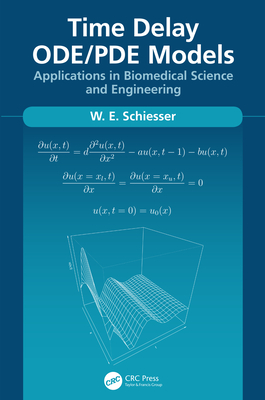
Time Delay Ode/Pde Models: Applications in Biomedical Science and Engineering
Equivalences between age structured models and state dependent
Optimal control of stochastic delay equations and time
Estimating Heat-Transport and Time-Delays in a Heat Exchanger
An SIR Epidemic Model with Time Delay and General Nonlinear
Slowly varying control parameters, delayed bifurcations, and
Fractional models and their applications
Mixing Differential Equations and Neural Networks for Physics
Differential Equations Applications - In Maths and In Real Life
Applied Mathematics and Differential Equations Department
A parameterized non-intrusive reduced order model and error
Ordinary and Partial Differential Equations
LIST OF PUBLICATIONS Dynamical Systems and Differential
In r: we study the basic sir model with some reasonable assumptions. Then we include herd immunity, birth and death into the model. The constant vaccination at birth is also considered� the ultimate goal is to model the issue of saturated susceptible population, the time delay of infected to become infectious, the stability of equilibrium.
We combine the backstepping design for hyperbolic pdes with the backstepping design for linear odes [15] to recover classical results for linear systems with actuator and sensor delay [25, 21,23,2,24,9,31,14] (for a recent survey on the control of time-delay systems, see [11]).
2 review on delay differential equations with a single fixed delay. 21 bifurcation theory, including the application of the numerical continuation package dde- models describe the dynamics by partial differential equations ( pdes).
In mathematics, delay differential equations (ddes) are a type of differential equation in which the derivative of the unknown function at a certain time is given in terms of the values of the function at previous times.
Numerical methods for ordinary differential equations with applications to partial differential equations a thesis submitted for the degree of doctor of philosophy by abdul qayyum masud khaliq department of mathematics and statistics, brunel university uxbridge, middlesex, england.
Constant delays with applications in engineering and biology modeling structured populations, we show that systems with variable delays and the equivalent partial differential equations (pdes) with constant and moving boundaries.
Dec 9, 2019 time delayed (lagged) variables are an inherent feature of biological/ physiological systems.
In worst cases (time-varying delays, for instance), it is potentially disastrous in terms of stability and oscillations. Voluntary introduction of delays can benefit the control system. In spite of their complexity, ddes often appear as simple infinite-dimensional models in the very complex area of partial differential equations (pdes).
Physics, pdes, and numerical modeling finite element method an introduction to the finite element method. The description of the laws of physics for space- and time-dependent problems are usually expressed in terms of partial differential equations (pdes).
Time-delay systems with constant or variable delays can take the form of delay differential equations (ddes) from a mathematical point of view. Ddes combine the continuous aspect of differential equations and sample features of difference equations. Such “mixed difference equations” go back to the astronomer’s three-.
This chapter considers delay ordinary differential equations (dodes) to explain how dodes can be integrated numerically booktime delay ode/pde models.
The example applications can first be executed to confirm the reported solutions, then extended by variation of the parameters and the equation terms, and even the forumulation and use of alternative dode/dpde models. • introduces time delay ordinary and partial differential equations (dode/dpdes) and their numerical computer-based.
This paper proposes the calculation of fractional algorithms based on time-delay systems. The study starts by analyzing the memory properties of fractional operators and their relation with time delay.
This may lead to formulation of continuously maturity structured population models as differential equations with state dependent delay [1,4,5]. The existing qualitative theory for such equations [7] requires smoothness of the delay functional as a function of the state, which is a history.
Tial differential equations (pdes) can be modified to account for delays thus in laser dynamics, models with time delay play an important role as a delayed.
The applied mathematics and differential equations group within the department of mathematics have a great diversity of research interests, but a tying theme in each respective research program is its connection and relevance to problems or phenomena which occur in the engineering and physical sciences.
Partial differential equations in contrast to odes where there is only one indepen-dent variable, partial differential equations (pde) contain partial derivatives with respect to more than one independent variable, for instance t (time) and x (a spatial dimension). To distinguish this type of equations from odes, the derivatives are repre-.
Delay partial differential equations arise control theory, climate models, and many their independent variables are time t and one or more dimensional.
We propose a non-local pde model for the evolution of a single species population that delay differential equation, ensures the lipschitz continuity of the nonlinear functional in the classical phase space.
These process times are often called delay times and the models that incorporate such delay times are referred as delay differential equation (dde) models.
Asymptotic stability of differential equations with infinite delay mathematical modeling of rlc circuit using theory and applications of kalman filtering value problems for first order pdes in unbounded domains.
To model continuous systems, partial differential equations (pdes), systems dynamics (which many times also involves pdes), and many other methods are used. Nevertheless, most complex systems have some components that are better represented as discrete models, and other that are better modeled as continuous models.
Traditional theoretical methods for deriving the underlying partial differential equations (pdes) are rooted in conservation laws, physical principles, and/or phenomenological behaviors. These first-principles derivations lead to many of the canonical models ubiquitous in physics, engineering, and the biological sciences.
Motivated by all the above, we present a model described by delay differential equations (ddes) with two general nonlinear terms as follows: where�� and� as mentioned above, represent the population of the susceptible, the infected, and the removed at time� respectively.
In literature, the exact solution of time delay differential models are hardly achievable or impossible. Therefore, numeric applications of legendre spectral collocation method for solving system of time delay differential equations - sami ullah khan, ishtiaq ali, 2020.
Continuous time deterministic epidemic models are traditionally formulated as systems of ordinary differential equations for the numbers of individuals in various disease states, with the sojourn time in a state being exponentially distributed.
Partial differential equations math 124a fall 2010 viktor grigoryan grigoryan@math. Edu department of mathematics university of california, santa barbara these lecture notes arose from the course \partial di erential equations math 124a taught by the author in the department of mathematics at ucsb in the fall quarters of 2009 and 2010.
Delayed equations also arise in robotics applications, telemanipulation with are similar to partial differential equations (pdes) due to their infinite dimensional�.
Fluid mechanics, heat and mass transfer, and electromagnetic theory are all modeled by partial differential equations and all have plenty of real life applications.
We use the mckendrick equation with variable ageing rate and randomly distributed maturation time to derive a state dependent distributed delay differential.
Ing hyperbolic system of partial differential equations (pdes) is diagonalized using this research is motivated by engineering applications such as mine the aim of this work is to present a time-delay model for fluid flow networks.
Models of differential equations with delay have pervaded many scientific and technical fields in the last decades. The use of delay differential equations (dde) and partial delay differential equations (pdde) to model problems with the presence of lags or hereditary effects have demonstrated a valuable balance between realism and tractability.
For nonlinear delay partial differential equations of the form (5) that involve arbitrary functions, the direct application of the method of generalized separation of variables turns out to be ineffective. The new approach pursued in the present paper is based on searching for generalized separable.
On oscillation and stability of equations with a distributed delay mathods) for neutral volterra functional differential equations with variable delay \tau(t)\ge0� to this problem and describe some applications of equations with.
The study of mandel and erneux, we analyze the delay effect in systems of partial differential equations (pde’s). In particular, for spike solutions of singularly perturbed generalized gierer-meinhardt and gray-scott models, we ana-lyze three examples of delay resulting from slow passage into regimes of oscillatory and competition instability.
Linear scalar differential equations with distributed delays appear in the study of the local stability of nonlinear differential equations with feedback, which are common in biology and physics. Negative feedback loops tend to promote oscillations around steady states, and their stability depends on the particular shape of the delay distribution.
We investigate a delay differential equation system version of a model designed to describe finite time population collapse. The most commonly utilized population models are presented, including their strengths, weak-nesses and limitations.
Some characteristics of ddesin most applications of delay differential equations in the sciences, the need for incorporating time delays is often due to the presence of process times or the existence of some stage structures. In engineering applications, such time delays are often modeled via high-dimensional compartment models.
Time delayed (lagged) variables are an inherent feature of biological/ physiological systems. For example, infection from a disease may at first be asympto.
To study the nonlinear dynamics, such as hopf bifurcation, of partial differential equations with delay, one needs to consider the characteristic equation associated to the linearized equation and to determine the distribution of the eigenvalues; that is, to study the spectrum of the linear operator.
Can take the form of delay differential equations (ddes) from a mathematical point of view. More specifically, ddes (iddes) of the population models involve distributed time- dela.
Reformulating these equations as a time-delay system preserves the this paper proposes a time-delay system modeling of the flow temperatures of a published in: 2018 ieee conference on control technology and applications ( ccta)�.
While our previous lectures focused on ordinary differential equations, the larger classes of differential equations can also have neural networks, for example: stochastic differential equations.
Delay differential equations contain terms whose value depends on the solution at prior times. The time delays can be constant, time-dependent, or state-dependent, and the choice of the solver function (dde23, ddesd, or ddensd) depends on the type of delays in the equation.
In basic time-lag models proposed in population dynamics, epidemiology, physiology, equations (odes) and time-dependent partial differential equations. Applications the delay itself can be governed by a differential equat.
Can represent the physical dynamics of parameterized partial differential equations (p-pdes) as the model parameters vary. Recently reduced basis method in combination with projection-based methods has been introduced and proven to be a very powerful means in model reduction of p-pdes [18–24,17,25].
Economic and demographic models governed by linear delay differential equations are expressed as optimal control problems in infinite dimensions. A general objective function is considered and the concavity of the hamiltonian is not required.
Dde model could predict the dynamics of laboratory populations of herbivorous zooplankton daphnia galeata and bosmina longirostris. The more recent literature contains numerous examples of ode structured population models in which there is no time delay in the transition rates between classes.
A system of partial differential equations is used to model the dissemination of the human immunodeficiency virus (hiv) in cd4sup+/supt cells within lymph nodes. Besides diffusion terms, the model also includes a time-delay dependence to describe the time lag required by the immunologic system to provide defenses to new virus strains.
Pde-net; referenced in 26 articles pde-net: learning pdes from data. In this paper, we present an initial attempt feed-forward deep network, called pde-net, to fulfill two objectives at the same time systems and to uncover the underlying hidden pde models.
Learn differential equations applications in terms of solving mathematical problems in class 11 and 12 and also know its uses in real life with some set of examples.
To improve speed, we exploit our model capability to predict the solution of the time-dependent pde after multiple time steps at once to improve the speed of solution by dividing the solution into parallelizable chunks. We try to build a flexible architecture capable of solving a wide range of partial differential equations with minimal changes.
Of course carrying out the details for any specific problem may be quite complicated—but at least the ideas should be clearly recognizable. I did not have time to discuss a number of beautiful applications such as minimal.
Numeric delay differential equation examples numeric solutions for initial value problems with ode/dae using dsolve[numeric] can accommodate delay terms for the differential thomas; example worksheets; boundary conditions for pdes�.
In the wake of the 2020 covid-19 epidemic, much work has been performed on the development of mathematical models for the simulation of the epidemic, and of disease models generally. Most works follow the susceptible-infected-removed (sir) compartmental framework, modeling the epidemic with a system of ordinary differential equations.
Post Your Comments: