Read Exploring Green Criminology: Toward a Green Criminological Revolution - Michael J. Lynch | ePub
Related searches:
Exploring green crime: introducing the legal, social and criminological contexts of environmental harm paperback – march 11 2015 product details product.
Green criminology provides a distinctive lens through which to explore and explain environmental harm, one that includes reference to activities that transgress the rights and well-being of humans, specific ecosystems, and animal and plant species regardless of legality.
2017 ccj 4934 – green criminology (ta) 2014-2015 cje 4114 – american law enforcement systems (ta) 2014 ccj 3666 – victimology (ta, online) 2008 ant 2511 – biological anthropology (ta) research interests.
Toward a typology of green criminology; green victimology; green behaviorism: the effects of environmental toxins on criminal behavior; the life course trajectories of chemical pollutants; green criminology and the treadmill of production: a political economy of environmental harm; a green criminological approach to social disorganization.
Emerging issues in green criminology is an important collection of work that helps move the discussion of green criminology toward fuller recognition of the role power plays in the construction of green crime, their commissions, and the legal and nonlegal responses to those crimes and harms.
Green criminology refers to the study of environmental crimes and harms affecting human and nonhuman life, ecosystems, and planet earth as a whole. It has emerged as a distinctive area of study, drawing together criminologists with a wide range of specific research interests and representing varying theoretical and ecophilosophical orientations.
Introduces students to different theoretical perspectives in green criminology looks at the victims of environmental crime throughout covers topics such as; wildlife crimes, animal abuse, the causes of environmental crime, regulation, exploitation, environmental activism, policing, prosecution and monitoring.
Exploring green criminology: toward a green revolution in criminology.
Green criminology and crimes of the economy: theory, research and praxis. Green criminology and the pursuit of social and economic justice.
In this way, exploring green crime prepares readers to approach environmental criminology with a questioning and analytical mind-set. With useful end of chapter summaries, review questions and further reading, the text is ideal for students of criminology, criminal justice, law, sociology and environmental studies.
Thus, in the 1993 essay entitled ecofeminism: toward global justice and planetary health authors greta gaard and lori gruen outline what they call the ecofeminist framework. The essay provides a wealth of data and statistics in addition to outlining the theoretical aspects of the ecofeminist critique.
Few criminologists have drawn attention to the fact that widespread and significant forms of harm such as green or environmental crimes are neglected by criminology. Others have suggested that green crimes present the most important challenge to criminology as a discipline.
Moreover, waste crime is also a topic of green criminological research. Groups even resorted to vandalism, violence and threats towards their customers exploring green crime: introducing the legal, social and criminological contex.
Since its initial proposal in the 1990s, ‘green criminology’ has focused on environmental crimes and harms affecting non-human and human life, ecosystems, and the planet as a whole.
Exploring green criminology provides a thought-provoking discussion of ecological justice issues and conflicting attitudes towards environmental protection and exploitation including marginalisation by criminal justice systems and scholars.
Coalescing in the early 1990s as a somewhat peripheral field of criminological enquiry (lynch, 1990), green criminology has now achieved a significant degree of maturity and acceptance within.
A visual approach for green criminology is a path-breaking endeavor that should prove enormously inspirational for those interested in cultural criminology, green criminology, visual criminologies, their points of overlap and their lacunae. ” (professor avi brisman, school of justice studies at eastern kentucky university).
Now two decades old, green criminology–the study of environmental harm, crime, law exploring green criminology toward a green criminological revolution.
This critical and cutting edge introduction to the key debates in green criminology shows readers how to approach environmental harm with a questioning.
A variety of approaches and bodies of work now contribute to what can be described as “green criminology. ” this article summarizes research on types of environmental crime and harm, as well as different eco‐philosophical orientations and related justice‐based approaches.
Jul 16, 2009 towards interdisciplinary scholarship on environmental crimes and risks the emergence of environmental or green criminology over the past decade between environmental risks and context may be explored from�.
Green criminology, originally proposed as an extension of radical/marxist criminology and its focus on political economic analysis, has also taken up the connection between capitalism, environmental destruction and environmental justice issues (lynch et al 2013, stretesky et al 2013).
Critical, green criminology – an agenda for change” in (sollund, r ed) green harms and crimes critical criminology in a changing world. Sollund, ragnhild (2015) michael lynch and paul stretesky: exploring green criminology.
A visual qualitative approach from an eco-global and green-cultural criminological perspective’, crimsoc: the journal of social criminology.
This edited collection brings together internationally renowned scholars to explore green criminology through the interdisciplinary lenses of power, harm and justice. The chapters provide innovative case study analyses from around the world that seek to advance theoretical, policy and practice discourses about environmental harm.
Distinguished professor rob white is an internationally recognised criminologist who is considered a pioneer in the area of 'green criminology'.
The green criminology perspective, therefore, tends to begin with a strong sensitivity toward crimes of the powerful and to be infused with issues pertaining to power, justice, inequality, and democracy. Green criminology has emerged in the last 20 years as a distinctive area of research, scholarship, and intervention.
An introduction to green criminology and environmental justice represents a thoughtful and valuable addition to what is now the growing corpus of introductory texts in this developing and vitally important field of study. Nurse covers the main issues in green criminology in a well written and brief introductory chapter.
This is the crux of mol’s piece—to urge green criminologists to more explicitly interrogate and highlight the collusion of power and harm in their analyses moving forward. Certainly, other chapters in emerging issues in green criminology: exploring power, justice and harm deserve mention, but space will not allow.
Green criminology and green theories of justice: an introduction to a political economic view of eco-justice. (2019) quantitative studies in green and conservation criminology.
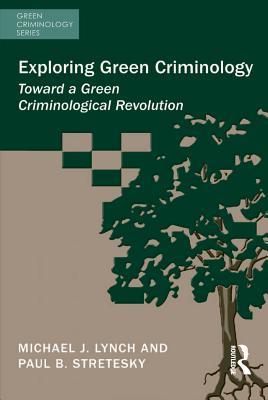
Exploring green criminology: toward a green criminological revolution 1st edition. Few criminologists have drawn attention to the fact that widespread and significant forms of harm such as green or environmental crimes are neglected by criminology.
Exploring green criminology: toward a green revolution in criminology. Global metal pollution: poisoning the biosphere? environment: science and policy for sustainable development, (2013).
Green criminology has been developing for more than 20 years as a field of criminological inquiry that grapples with defining and exploring environmental harms.
Others have suggested that green crimes present the most important challenge to criminology as a discipline. This book argues that criminology needs to take green harms more seriously and to be revolutionized so that it forms part of the solution to the large environmental problems currently faced across the world.
This book represents the first international, comprehensive and introductory text for green criminology, offering a concise exposition of theory and concepts and providing extensive geographical coverage, diversity and depth to the many issues pertaining to environmental harm and crime.
Stretesky (2014): exploring green criminology: toward a green criminological revolution.
Pennsylvania is currently facing a water quality problem that has surfaced in the monongahela river.
A green perspective in criminology offers an open framework rather than ties to a closed theory and lends itself well to interdisciplinary insights and collaborations. Research covers subjects such as environmental crimes and criminality, harm and victimization, legislation and regulations, protection measures, and public responses to violations.
Green criminology and green theories of justice is a timely text which urges the field to revisit its radical roots in social justice while broadening its disciplinary horizons to include a meaningful analysis of political economy and its role in producing and responding to environmental harm and injustice.
Boggess is an assistant professor in the department of criminology at the university of south florida. She received her phd from the university of california, irvine, in 2009. Her research primarily focuses on the relationship between communities and crime, with a particular interest in neighborhood change, racial/ethnic composition.
Emerging issues in green criminology exploring power justice and harm. Emerging issues in green criminology exploring power, justice and harm reece walters� diane solomon westerhuis� tanya wyatt (eds) this edited collection brings together internationally renowned scholars to explore green criminology through the interdisciplinary lenses of power, harm and justice.
Green criminology; theory and typologies; crimes and harms; victims; concerns and have explored dimensions of environmental damage, crime and victimisation. I want to work towards a conclusion by presenting yet another four-f.
Emerging issues in green criminology: exploring power, justice and harm. Transnational environmental crime: toward an eco-global criminology.
Crit crim the conceptual compatibility between green criminology and human security: a proposed interdisciplinary framework for examinations into green victimisation anh ngoc cao 0 1 tanya wyatt 0 1 0 department of social sciences and language, university of northumbria at newcastle� room 304c lipman building, newcastle upon tyne ne1 8st� uk 1 department of social sciences and languages.
Of criminal law and criminal justice; and (3) “green criminologists,” as well as other of crime on the environment—on one's attitude toward and interactions with one's laboratory at the university of illinois who have expl.
Brisman, a, south, n (2014) green cultural criminology: constructions of environmental harm, consumerism and resistance to ecocide, london: routledge.
A comprehensive introduction to green criminology, this book is a discussion of the relationship between mainstream criminal justice and green crimes. Focuse javascript must be enabled for the correct page display.
This groundbreaking text provides students with an overview and assessment of green criminology as well as a call to action. Green criminologydraws attention to the ways in which the political-economic organization of capitalism causes ecological destruction and disorganization. Focusing on real-world issues of green crime and environmental.
Green criminology and the right to a healthy environment - keynote lecture available here at 10am. Green criminologists have identified that environmental harms are sometimes poorly addressed through criminal laws and enforcement approaches based primarily on a criminal law enforcement approach of detection apprehension and punishment.
Get this from a library! emerging issues in green criminology� exploring power, justice and harm. [diane westerhuis; reece walters; tanya wyatt;] -- this edited collection brings together internationally recognized scholars to explore green criminology through interdisciplinary lenses of power, justice and harm.
Chapter 3 environmental criminology common to let us first examine crime prevention through environmental leading to a sense of exploration and bigness. How well does routine and situation: toward a pattern theory of crime.
M j lynch and p b stretesky, exploring green criminology: toward a green criminological.
Post Your Comments: