Read Solitary Alpine Fox (Vulpes Lagous) with Summer Coat in Svalbard Norway Journal: 150 Page Lined Notebook/Diary - NOT A BOOK | ePub
Related searches:
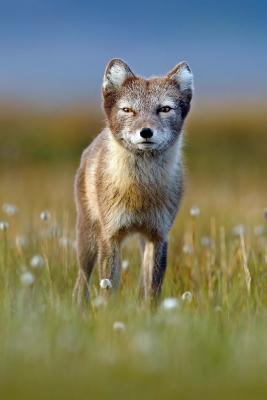
Solitary Alpine Fox (Vulpes Lagous) with Summer Coat in Svalbard
Solitary Alpine Fox (Vulpes Lagous) with Summer Coat in Svalbard Norway Journal: 150 Page Lined Notebook/Diary
Highways associated with expansion of boreal scavengers into the
All Species Of Foxes With Pictures (23 Species) - Animals Home
Vulpes vulpes are highly co-operative breeders with some populations consisting of one monogamous male and female (similar to canis lupus) and several vixen non-breeding helpers, some live in just monogamous pairs and others remain solitary.
It breeds north of and above the tree line on the arctic tundra in north america and eurasia and on the alpine tundra in fennoscandia, ranging from northern greenland at 88°n to the southern tip of hudson bay, canada, 53°n.
Vulpes) throughout southern ontario, canada, with cases extending into the northeastern united states, but has almost been eliminated, except for isolated foci in the southwestern part of ontario. 15 this variant has not been reported in new york, new england, or elsewhere in the united states since 2001, a direct benefit of systematic orv in ontario.
We evaluated support for these hypotheses using the kit fox (vulpes macrotis), a solitary carnivore subject to intraguild predation, as a model.
Male raccoons and red foxes were trapped alive and exposed to each other in solitary carnivores: the raccoon (procyon lotor) and the red fox (vulpes.
Which is also true for the arctic fox (vulpes lagopus) in fennoscandia. As a consequence of shrinking arctic and alpine habitats, red fox expansion and interruptions in rodent cycles, the arctic fox was in 2009 classified by the iucn as one of 10 flagship species as indicators for ongoing climate change impacts (iucn 2009).
The red fox, which is the most common species of fox worldwide (and almost certainly the fox variety ylvis is talking about; there are only about 120 arctic foxes left in norway), is highly vocal.
The arctic fox is an incredibly hardy animal that can survive frigid arctic temperatures as low as –58°f in the treeless lands where it makes its home.
Abstract� one obvious threat to the endangered arctic fox vulpes lagopus population in fennoscandia is competition with the larger red fox vulpes vulpes, which may have expanded its range towards the alpine tundra because of increased food availability in the low-alpine and subalpine region.
The arctic fox is the only terrestrial mammal native to iceland. They are very solitary animals that only gather with other specimens during the mating and breeding season. The main threats to this animal are humans, who hunt it for its fur, and the red fox, that, due to global warming, is occupying areas where arctic foxes used to live.
Buy solitary alpine fox (vulpes lagous) with summer coat in svalbard norway journal: 150 page lined notebook/diary on amazon.
The arctic fox (vulpes lagopus), also known as the white fox, polar fox, or snow fox, is a small fox native to the arctic regions of the northern hemisphere and common throughout the arctic tundra biome. It is well adapted to living in cold environments, and is best known for its thick, warm fur that is also used as camouflage.
Alpine habitats, threatening endangered species such as the arctic fox (vulpes lagopus). Several factors have been suggested as underlying mechanisms: increased access to ungulate carcasses, the absence of top predators and increased productivity in mountainous areas.
The members of this genus are colloquially referred to as true foxes, meaning they form a proper clade.
28 jan 2009 the food habits and trophic niche breadth of the red fox (vulpes vulpes) were studied across a wide altitudinal range in a protected alpine area.
Foxes are found in a wide range of habitats from the desert (fennec fox, vulpes zerda) to the arctic (arctic fox, vulpes lagopus), and from high elevations in the mountains to open plains (hoffman and sillero-zubiri, 2016). Foxes are opportunistic and thrive where they are able to find food and shelter.
The arctic fox's paws are sheathed in dense fur during the winter,unlike other canids and giving it the name lagopus (which means the rabbit footed).
The smallest fox species, also the smallest of all canids, the fennec fox (vulpes zerda) lives in the sahara desert and the sinai peninsula.
(vulpes lagopus, formerly known as alopex lagopus), also known as the white fox, polar fox or snow fox, is a small fox native to arctic regions of the northern hemisphere and is common throughout the arctic tundra biome. The greek word alopex, (ἀλώπηξ) means a fox and vulpes is the latin version.
Habitat selection and the influence of habitat variables on red fox ranges were assessed in the gran paradiso national park, western alps, italy, all year round.
17 may 2020 expansion of boreal scavenging species, such as the red fox vulpes vulpes, which may intensify negative interactions with alpine species.
Remarks: dahlgren and gjerde (2010b) infected six of each fox species with fresh portions of esophagus, diaphragm, and abdominal muscles from moose, alces alces, from norway.
Post Your Comments: