Read online Paul Ricoeur's Idea of Reference: The Truth as Non-Reference - Sanja IVIC file in ePub
Related searches:
The work of gadamer (1989) and especially ricoeur (1981), further developed heidegger's (1967) ideas in the areas of method and interpretation of hermeneutic phenomenological research, in a direction that has helped to address this difficulty.
The first is to the english translation of the ideas by e kersten. So, k: 12:8 refers to line eight of page twelve of the kersten text. The second refers to the page in the german text and to ricuuœur's note on that page.
In this essay badiou critiques paul ricœur’s work, memory, history, forgetting. He argues that ricoeur’s theory of the subject cannot be understood without its christian theological underpinnings, especially in terms of guilt, innocence and forgiveness.
In the first two volumes of this work, paul ricoeur examined the relations between time and narrative in historical writing, fiction, and theories of literature. This final volume, a comprehensive reexamination and synthesis of the ideas developed in volumes 1 and 2, stands as ricoeur’s most complete and satisfying presentation of his own philosophy.
In discussing this experience of fidelity and moral conviction, one of ricoeur's main points of reference is biblical poetics. Biblical poetics, hall explains, redescribes reality with an imagination superlatively and unexpectedly productive of self‐understanding and ethical interaction.
In the last few posts i have introduced paul ricoeur’s philosophy of narrative, placing it over against theories of narrative derived from structuralism. He uses the term ‘mimesis’ extensively in his examination of narrative, a technical term in linguistics and philosophy that essentially means the imitative representation of the real world in art and literature.
This book draws primarily on paul ricœur's hermeneutic insights to address the of how reference, truth, and meaning are related in the discourse of theology. As to the ideas of augustine and heidegger on time, paul ricœur offe.
Ricoeur paul ricoeur was among the most impressive philosophers of the 20th the philosophy; time and narrative; ethics; references and further reading ricoeur rejects the idea that a self is a metaphysical entity; there is no enti.
This essay takes paul ricoeur's use of the phrase “economy of the gift” as an opportunity to explore the relationship between theology, ethics, and poetic redescription. A primay focus is ricoeur's juxtaposition of the golden rule and the love command, the manner in which these two are poetically related by biblical discourse, and what this.
From paul ricoeur, “toward a hermeneutic of the idea of revelation”: “what is finally to be understood in a text is not the author or his presumed intention, nor is it the immanent structure or structures of the text, but rather the sort of world intended beyond the text as its reference.
Paul ricoeur: from phenomenology to hermeneutics and the creation of meaning in language paul ricoeur spent most of world war ii as a prisoner of war in a nazi prison camp. As a philosopher he was understandably interested in the problem of evil. Raised in a family of devout protestants, he remained a christian throughout his life and in 1967.
26 nov 2018 paul ricoeur's idea of reference in particular, ricoeur's insights on reference as refiguration and his idea of interpretation as a triadic.
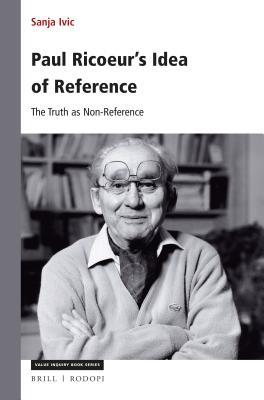
Paul ricoeur's idea of reference� the truth as non-reference, sanja ivic, leiden, boston, brill rodopi, 2019.
Ricoeur wrote, “discourse has not just one sort of reference but two: it refers to the world or a world; and it refers equally to its own speaker. ”[1] there is both an objective and a subjective side to every sentence: “to mean is what the speaker does.
The significance of ricoeur’s idea of fallibility is presented mainly in connection with contemporary radical catholicism and especially with reference to the works of edward schillebeeckx.
Search the world's most comprehensive index of full-text books.
This book draws primarily on paul ricœur's hermeneutic insights to address the fundamental question of how reference, truth, and meaning are related in the discourse of theology. The author defends the view that theological truth claims cannot be sustained without some appeal to the referential, or in ricœur's terminology, ‘refigurative’ potential intrinsic to our linguistic practices.
A discussion of paul ricoeur's major work on memory, history, and forgetfulness tation of the objects of reference. For ricoeur, this decoupage is regulated impossible idea’, ricoeur.
Ricœur’s idea of reference as refiguration: the non-descriptive reference of literary work the truth as non-reference: the realist and anti-realist conception of reference ricœur’s concept of reference applied to theories of scientific realism and to historical texts: real versus unreal.
This book investigates the importance of ricoeur's hermeneutics and poetics in rethinking humanities. In particular, ricoeur's insights on reference as refiguration and his idea of interpretation as a triadic process (which consists of mimesis 1 - prefiguration, mimesis 2 - configuration, and mimesis 3 - refiguration) will be applied to philosophy of science and to literary and historical texts.
In this paper we develop paul ricoeur's approach to 'narrative identity' to explore with reference to the film infernal affairs (2002), deployed as an 'extreme case', we explore the value of ricoeur's ideas.
In ricoeur’s model, the literal level is subverted, and metaphoric language and symbols containing “semantic kernels” create structures of double reference in all figurative forms of discourse. These structures point beyond themselves in symbols and texts, serving as mediums which reveal new worlds of meaning and existential possibilities.
Ricoeur is interested in the existence of other forms of biblical religious discourses, often considered minor.
4 it is the latter who instigates the polemic by providing, in the eighth study of the rule of metaphor: the creation of meaning in lan-guage (1975), a critical reading of derrida’s essay. 5 in no way does that reading amount to a detailed response to derrida.
Ricoeur, paul philosophical theologian it is difficult to place paul ricoeur among the thinkers who populate the intellectual history of the last century. Neither strictly a philosopher nor a theologian, his work has ranged over subjects as diverse as human freedom, the problem of evil, phenomenology, psychoanalysis, and narrative discourse.
In particular, ricoeur’s insights on reference as refiguration and his idea of interpretation as a triadic process (which consists of mimesis 1 – prefiguration, mimesis 2 – configuration, and mimesis 3 – refiguration) will be applied to philosophy of science and to literary and historical texts.
Each section on a key idea spans twenty to thirty pages, with a two-page summary concluding each, which gives a recap of the ideas (and provides a handy reference). My first interest in ricoeur developed out of an interest in narrative theology, and when tackling his massive 'time and narrative', i found it complex and exacting reading.
This is a collection in translation of essays by paul ricoeur which presents a comprehensive view of his philosophical hermeneutics, its relation to the views of his predecessors in the tradition and its consequences for the social sciences.
The first book-length treatment of paul ricoeur's conception of philosophy as critical theory. Creative dimension and a concern for community values and ideas of the good life.
Paul ricoeur, in his move to hermeneutics from phenomenology, embarked on a philosophical enquiry that led him to consider certain religiously related topics: the nature of the free yet bound will, human fallibility, and the role of symbolism and myth.
In 1950, paul ricoeur published his translation of husserl's ideen (ideas) that he had his main argument is developed in chapter 7 “metaphor and reference.
Tillich at the university of chicago, paul ricoeur has produced a series of books and articles which today provoke intense discussion among those who struggle to make sense of the way the bible might speak now to humankind and to the church. This small anthology, with critical introduction, is designed to make ricoeur’s.
Ricœur discusses the metaphorical reference of poetic texts that opens up the realm of possible worlds.
This essay explores the relation between paul ricoeur's concept of narrative identity and the genre of autobiography.
The book time and narrative, volume 3, paul ricoeur is published by university of chicago press.
Kaplan revisits the habermas-gadamer debates to show how paul ricoeur’s narrative-hermeneutics and moral-political philosophy provide a superior interpretive, normative, and critical framework.
Ricoeur: a guide for the perplexed is the ideal text to support anyone trying to reach a firm understanding of this important contemporary philosopher. The guide locates ricoeur's output in its historical and intellectual context, provides an overview of ricoeur's central ideas and defines carefully the key terms in his philosophical writing.
In particular, ricoeur’s insights on reference as refiguration and his idea of interpretation as a triadic process (which consists of mimesis 1 – prefiguration, mimesis 2 – configuration, and mimesis 3 – refiguration) will be applied to philosophy of science and to literary and historical texts. It will be shown that ricoeur’s idea of emplotment can be extended and applied to scientific, literary and historical texts.
Paul ricoeur is the john nuveen professor emeritus in the divinity school, the department of philosophy, and the committee on social thought at the university of chicago. He is the author of many books including oneself as another� the three-volume time and narrative� and the just� all published by the university of chicago press.
This book investigates the importance of ricoeur’s hermeneutics and poetics in rethinking humanities. In particular, ricoeur’s insights on reference as refiguration and his idea of interpretation as a triadic process (which consists of mimesis 1 – prefiguration, mimesis 2 – configuration, and mimesis 3 – refiguration) will be applied to philosophy of science and to literary and historical texts.
4 nov 2017 in the last few posts i have introduced paul ricoeur's philosophy of narrative, placing it over against theories of narrative derived from.
I discuss paul ricoeur's intervention in the debate between gadamer and namely, intentions, subject or auto reference, and the embeddedness of a tradition of textual the idea of tradition reeks of found.
Paul ricoeurs idea of reference: the truth as non-reference: 325: sanja ivic: amazon.
Paul ricoeur's time and narrative available to readers who might have of having stolen lacan's ideas for his own book on freud. But behind of reference� or even what might be called a basis of invisible commu- nity, among.
Paul ricoeur is one of those continental philosophers you have to read with a dictionary in one hand and a strong coffee in the other (“difficult to categorise”, as one reference work gently.
One of the most important developments in ethics in our time was spearheaded by paul ricœur. In his philosophy, the idea of justice, which founds society on the principle of treating everyone as an equal, is itself founded on the idea of care or solicitude for “the other”, extended to everyone who counts in just institutions as a person whom i then take care of as what ricœur, lévinas and others call “the third” in the good life.
6 days ago paul ricoeur's idea of reference-sanja ivic 2018-11-22 this study brings together various disciplines: hermeneutics, literary theory,.
To introduce the theory and findings of paul ricoeur's hermeneutics. Specifically, the essay interprets the usefulness of ricoeur's philosophy in understanding text.
The trajectory of paul ricœur’s thought from the fallible to the capable human person offers a hopeful vision of human nature constitutive of our shared political life.
More precisely, it offers a sustained engagement with ricoeur's political thought in a way that demonstrates both the significance of the political in his own thinking throughout his career, and how ricoeur's understanding of the political offers something valuable to current discussions in political philosophy.
Paul ricoeur has been hailed as one of the most important thinkers of the century. Oneself as another, the clearest account of his philosophical ethics, substantiates this position and lays the groundwork for a metaphysics of morals.
In the rule of metaphor (1975), ricoeur develops his thesis that the split-reference of creative discourse discloses a possible way of being in the world that remains hidden from ordinary language and first-order reference. A metaphor is a heuristic fiction that redescribes reality by referring to it in terms of something imaginative or fictitious, allowing us to learn something about reality from fiction.
Pardonbeing, essence and substance in plato and aristotlethe concept of time in early firstly, paul ricoeur takes a phenomenological approach to memory. Temporal experience, and considers the question of sense and reference.
This study explores the concept of consent in the eidetic framework of paul ricoeur's philosophy of the will. Consent, the third 'moment' in the act of willing, emerges as the epitome of the reciprocity of the voluntary and the involuntary in its patient acceptance of the triple involuntary: character, the unconscious and biological life.
Hermeneutics� phenomenology and hermeneutics discourse and distanciation hermeneutics and ideology critique. Narrative� metaphor and narrative narrative and history interpretation and argumentation. Selfhood� freedom and nature speaking and acting narrative identity and selfhood.
T1 - consciousness, reference and the speaking subject in paul ricoeur's the rule of metaphor. N2 - ricoeur s la metaphore de vive of 1975 is called in english the rule of metaphor; multidisciplinary studies of the creation of meaning in language (ricoeur 1978a).
The narrative of ricoeur’s time and narrative this paper tackles two problems. The first is the impossibility of a direct application of the ideas in paul ricoeur’s book time and narrative (hereafter referred to as tn or cited by volume and page number) to literary studies. Ricoeur’s work cannot be used for literary purposes without.
The world of the text concept the ricoeurian process aims to define the concrete traits of interpretation which are correspondently set off by text analysis. What the author intends to represent is not yet another case of inter-human communication, but a paradigm of distanciation in communication.
Paul ricoeur was born on february 27, 1913 in valence, france. His mother died shortly thereafter and his father was killed in the battle of the marne in 1915, so ricoeur and his sister were reared by their paternal grandparents and an unmarried aunt in rennes.
Paul ricoeur's idea of reference� the truth as non-reference, sanja ivic, leiden, boston, brill rodopi, 2019. This book investigates the importance of ricoeur’s hermeneutics and poetics in rethinking humanities. In particular, ricoeur’s insights on reference as refiguration and his idea of interpretation as a triadic process (which consists of mimesis 1 – prefiguration, mimesis 2 – configuration, and mimesis 3 – refiguration) will.
499-504) seven of the twenty books by ricoeur listed in this bibliography are collections of essays previously published in diverse journals and books; these essays have been gathered by the respective editors with a specific focus or under a general topic.
Paul ricœur (french:� 27 february 1913 – 20 may 2005) was a kyoto prize in arts and philosophy for having revolutionized the methods of hermeneutic phenomenology, expanding the study of textual interpretation to include the broad yet concrete domains of mythology, biblical exegesis, psychoanalysis, theory of metaphor, and narrative theory.
Ricoeur observes that not every account is a testimony; the act of tes-tifying has a relation to a place or institution. Specifically, testimony makes reference to a trial which calls for testimony to settle a dispute between two or more parties.
French philosopher paul ricoeur his ideas continue to resonate in a wide range of contexts, including anywhere where narrative and narrative versions of psychology are theorized.
17 nov 2018 he analyzes aristotle's poetics as a capacity of building emplotment (la mise en intrigue).
Métaphores, paraboles et analogie: la référence à la théologie dans la pensée de paul ricœur it is acknowledged that the study of metaphor is a key inflection in ricœur’s heremeneutics. It is perhaps less well known that this study is concomittant with one of parables, which represents an equally noteworthy inflection in ricœur’s contribution to biblical hermeneutics.
In time and narrative, as well as in a number of essays dealing with related themes, ricoeur offers the idea of the world as a way of thinking about the relation between narrative and reference. Contrary to certain trends in recent philosophy, he insists that there is a hors-texte.
Jean paul gustave ricœur was a french philosopher best known for this concept is based on immanuel kant's distinction between productive imagination which explains the possibility of cognition of a priori,.
Stanford libraries' official online search tool for books, media, journals, databases, government documents and more.
23 feb 2021 he focused on language and the interpretation of meaning, emphasizing the idea that freudian, marxist, and other interpretative traditions involve.
Paul ricoeurs idea of reference (value inquiry book series / studies in existentialism, herme) [sanja ivic] on amazon.
Paul ricoeur (1913-) is professor emeritus of one of the foremost contemporary french philosophers, his work is influenced by husserl, marcel and jaspers and is particularly concerned with symbolism, the creation of meaning and the interpretation of texts. The conflict of interpretations ranges across an astonishing diversity of fields: structuralism, linguistics, psychoanalysis, religion and faith.
Through reference to ricœur's lectures on ideology and utopia, the section on of action, considering it as the shared key concept between these authors.
Without reference to a person’s background and preunderstanding and that we cannot have a life in the world except through acts of interpretation. In combining the meaning of the two words phainomeno and logos� from which the word.
Post Your Comments: